What Is a Bone Fracture and How Is It Treated?
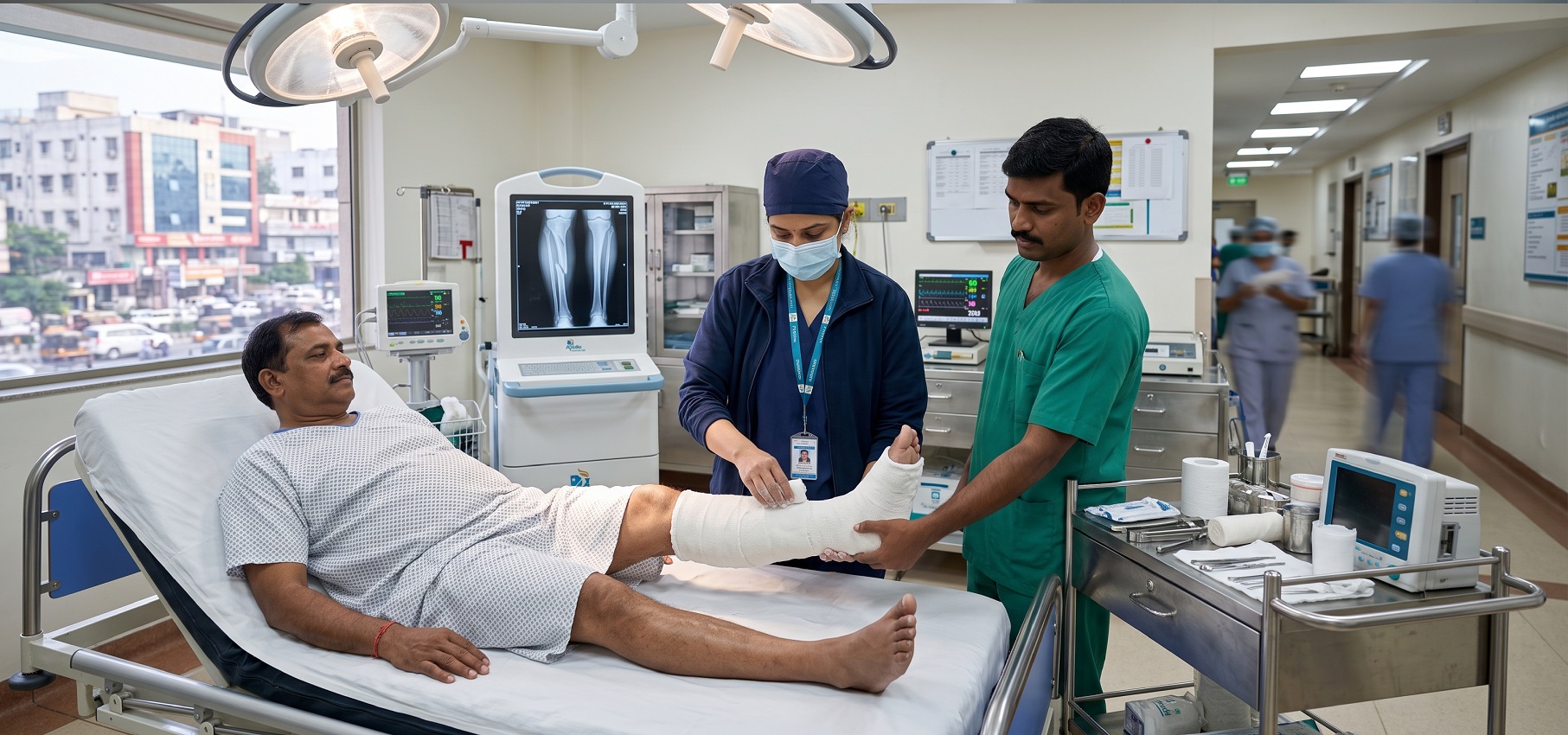
A bone fracture, commonly known as a broken bone, occurs when a bone cracks or breaks due to injury, falls, sports accidents, or underlying bone weakness. Symptoms often include pain, swelling, bruising, difficulty moving the affected area, and sometimes visible deformity.
Prompt diagnosis and appropriate treatment are important to ensure proper bone healing and prevent complications. In this guide, you’ll learn what a bone fracture is, the different types of fractures, common symptoms, treatment options, healing timelines, and when to consult an Orthopaedic trauma specialist for expert care.
Understanding Bone Fracture Causes and Risk Factors
Bone fractures occur when external force or underlying bone weakness exceeds skeletal strength, resulting in partial or complete breaks.
Common Causes of Broken Bones
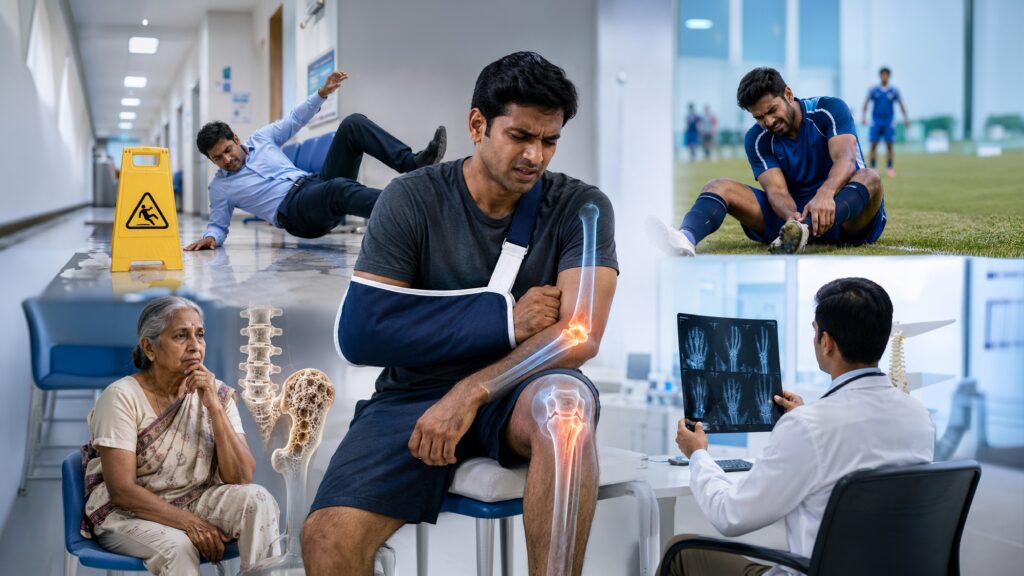
Traumatic injuries from falls, road accidents, and sports collisions are the leading fracture causes. Stress fractures develop through repetitive impact, while non-traumatic bone damage arises from conditions like osteoporosis. Patients recovering from ligament injuries can explore ACL Reconstruction Surgery Explained for comprehensive surgical guidance.
Who Is Most at Risk of Bone Fractures?
Older adults, postmenopausal women, and individuals with low bone density face the highest fracture risk. As per the Indian Orthopaedic Association, osteoporosis-related fractures are increasingly reported across Hyderabad, Telangana, and India.
Bone Fracture Symptoms: Signs You Shouldn’t Ignore
Bone Fracture Symptoms: Signs You Shouldn’t Ignore
Recognising bone fracture symptoms early prevents complications and ensures timely orthopaedic intervention.
Early Signs of a Fracture
Pain, swelling, bruising, and tenderness at the injury site are primary fracture indicators. Unlike sprains, fractures often cause visible deformity and complete loss of movement in the affected area.
Fracture Symptoms That Need Urgent Care
Severe deformity, bone protrusion, numbness, or inability to bear weight require immediate Emergency Department attention and X-ray Centre evaluation in Hyderabad.
Clinical Insight
Most uncomplicated wrist fractures can be successfully treated with appropriate immobilization, such as casting or splinting, followed by a structured rehabilitation programme to restore wrist strength, flexibility, and function. Recovery time varies depending on the type and severity of the fracture, but many patients regain good functional outcomes with timely diagnosis, appropriate treatment, and adherence to rehabilitation. By the American Academy of Orthopaedic Surgeons. Distal Radius Fractures (Broken Wrist).
Bone Fracture Treatment: Diagnosis and Care
Effective bone fracture treatment begins with accurate diagnosis and a structured care plan tailored to fracture type and severity.
Diagnostic Tests Used for Bone Fractures
Physical examination identifies tenderness, deformity, and restricted movement. X-ray imaging confirms fracture location and alignment, while CT scan and MRI scan results reveal complex fractures involving soft tissue, joints, or hairline stress injuries. Orthopaedic hospitals across Hyderabad utilise advanced imaging for precise fracture assessment.
Non-Surgical vs Surgical Treatment
Most fractures respond well to non-surgical orthopaedic treatment through casting and splinting, which immobilise and stabilise the bone during healing. Severely displaced or complex fractures require surgical fixation using plates, screws, or rods to restore correct bone alignment. Post-fixation rehabilitation accelerates recovery and restores full function.
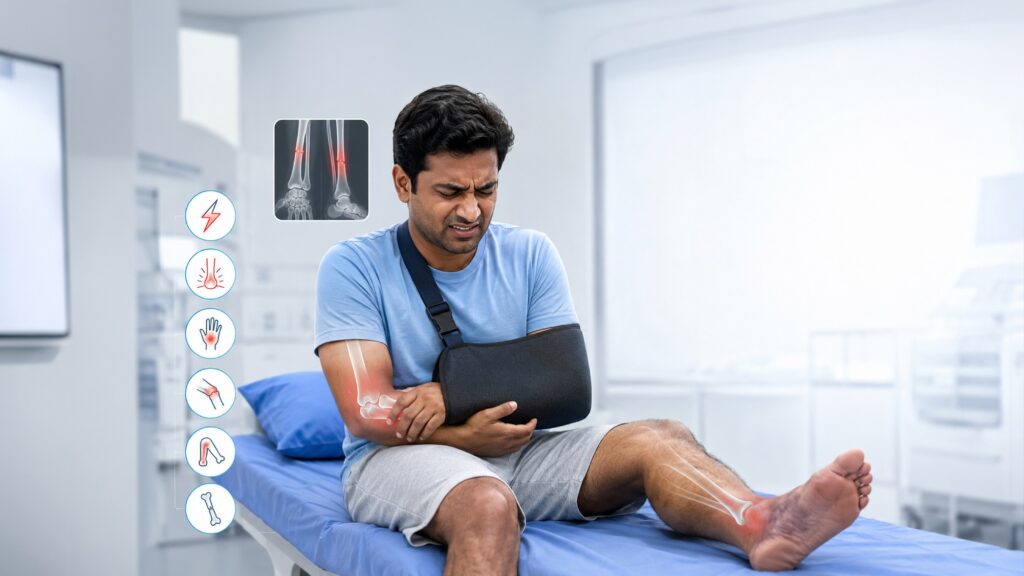
Bone Fracture Treatment Costs in India and When to See a Specialist.
Broken bones require prompt specialist evaluation — delayed fracture care increases complication risk and recovery time significantly.
| Service | Approximate Cost (₹) |
| Orthopaedic Consultation | ₹500–₹2,000 |
| X-ray | ₹500–₹1,500 |
| CT Scan | ₹3,000–₹8,000 |
| MRI Scan | ₹4,000–₹10,000 |
| Fracture Casting | ₹2,000–₹10,000 |
| Fracture Surgery | ₹50,000–₹3,00,000+ |
Visible deformity, severe swelling, numbness, or inability to bear weight require immediate emergency treatment at an orthopaedic clinic. Patients across Hyderabad and Telangana are encouraged to seek early specialist evaluation rather than delaying care. Follow-up consultations and rehabilitation form an essential part of complete fracture recovery across India.
Real Data Point
Osteoporosis is a major cause of fragility fractures in older adults. Hip, vertebral, and wrist fractures are among the most common osteoporotic fractures and are associated with significant disability, reduced quality of life, and increased mortality. As India’s population ages, the burden of osteoporosis-related fractures is expected to rise. By the International Osteoporosis Foundation. Osteoporosis and Fragility Fractures.
FAQ
How do I know if I have a fracture or just a sprain?
Fractures typically cause visible deformity, severe pain, and complete movement loss. Sprains involve soft tissue injury without bone integrity compromise. Diagnostic imaging confirms differential diagnosis accurately.
Will bone fractures heal on their own?
Minor fractures undergo natural bone regeneration through callus formation and tissue remodelling. However, displaced fractures require orthopaedic management and fracture stabilisation to ensure correct skeletal healing and prevent complications.
How to confirm a bone fracture?
Radiographic assessment through X-ray remains the primary diagnostic protocol for fracture identification. CT scan and MRI provide detailed skeletal trauma evaluation for complex or suspected fractures requiring comprehensive clinical examination.
When should I see a fracture specialist in Hyderabad?
Seek immediate clinical evaluation for severe pain, visible deformity, numbness, or inability to move. Early fracture management and treatment planning at a Hyderabad orthopaedic clinic ensures optimal musculoskeletal healthcare outcomes.
CONCLUSION
A bone fracture requires prompt diagnosis and appropriate treatment to ensure proper healing and restore normal function. Recognising symptoms early and seeking timely orthopaedic care can help prevent complications and speed up recovery.
If you suspect a bone fracture or are experiencing persistent pain, swelling, or difficulty moving a limb, book a consultation with an experienced orthopaedic specialist for accurate diagnosis and personalised treatment.