
Rheumatoid Arthritis: Symptoms, Causes, Stages, Medications & Treatment

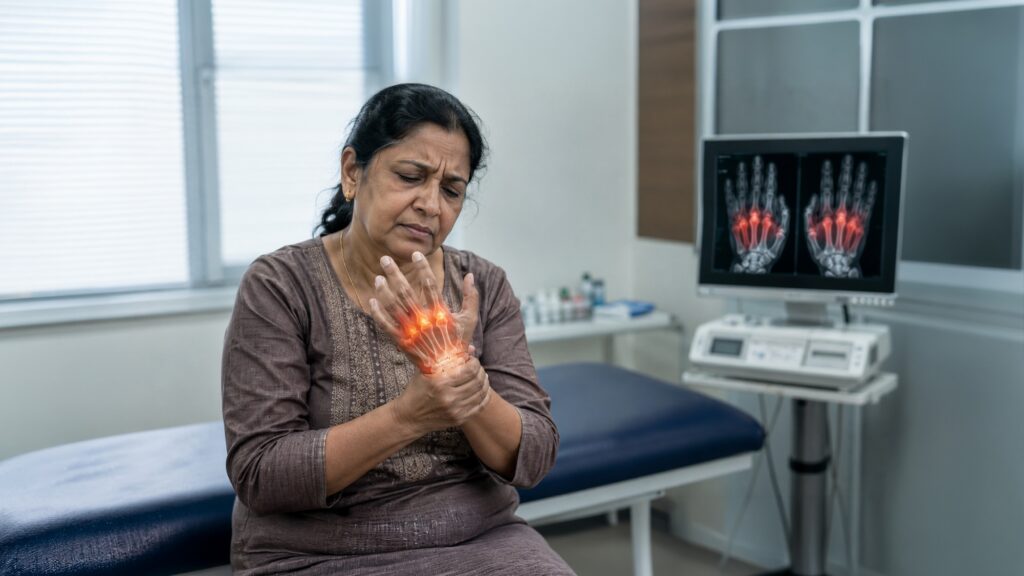
Rheumatoid arthritis (RA) is a chronic autoimmune disease in which the immune system mistakenly attacks the joints, causing pain, swelling, stiffness, and inflammation. If left untreated, rheumatoid arthritis can damage joints and affect mobility over time.
Early diagnosis and treatment can help slow disease progression, reduce symptoms, and improve quality of life. In this guide, you’ll learn what rheumatoid arthritis is, its symptoms and causes, the four stages of rheumatoid arthritis, available medications, treatment options, and when to seek specialist care.
What Is Rheumatoid Arthritis and How Does It Affect the Body?
Rheumatoid arthritis is a chronic autoimmune disease where the immune system mistakenly attacks healthy joint tissue, triggering persistent synovial inflammation. Unlike osteoarthritis, which results from wear and tear, RA is an immune system disorder that causes joint inflammation, pain, and gradual damage. Commonly affected joints include the wrists, fingers, knees, and feet. Patients across Hyderabad, Telangana, and India benefit from early diagnosis guided by specialists recognised by the Indian Rheumatology Association.
What Are the Early Rheumatoid Arthritis Symptoms?
What begins as occasional stiffness can quietly progress into lasting joint damage — which is why recognising rheumatoid arthritis symptoms early changes everything.
Early Signs Patients Often Ignore
Persistent morning stiffness lasting over an hour, swollen joints, joint pain, and unexplained fatigue are commonly dismissed as ageing or overwork. Systemic symptoms including low-grade fever, appetite loss, and generalised weakness further signal active inflammation. Reduced mobility affecting daily activities like writing and gripping prompts many Hyderabad patients to finally visit a rheumatology clinic or orthopaedic specialist.
Rheumatoid Arthritis in Knees and Legs
RA causes significant joint stiffness, swelling, and inflammation in the knees, ankles, and feet, restricting movement and disrupting daily function across patients in India.

What Are the Most Common Rheumatoid Arthritis Causes?
Rheumatoid arthritis does not have a single cause it develops through a combination of genetic, environmental, and hormonal factors that trigger an abnormal immune response.
- Rheumatoid arthritis stems from a dysfunctional autoimmune response where the immune system attacks healthy synovial tissue.
- Genetic factors account for an estimated 50 to 60 percent of overall disease risk, with family history of autoimmune disorders further elevating susceptibility.
- Among environmental triggers, smoking carries the strongest association, with a clear gene-environment interaction identified in research.
- Women face higher risk than men, particularly during hormonal shifts.
- A widespread misconception is that RA results from physical injury — it is fundamentally an immune dysfunction.
As per the National Health Portal India, early awareness of autoimmune triggers plays a key role in effective disease management across patients in Hyderabad, Telangana, and India.
Clinical Insight
Early diagnosis and prompt treatment with disease-modifying antirheumatic drugs (DMARDs), along with physiotherapy and occupational therapy, can improve hand function, reduce joint damage, and help many people with rheumatoid arthritis maintain their daily activities without requiring surgery. These recommendations are supported by the 2021 American College of Rheumatology Guideline for the Treatment of Rheumatoid Arthritis.
What Are the 4 Stages of Rheumatoid Arthritis?
Rheumatoid arthritis progresses through four distinct stages, each reflecting increasing joint damage and reduced function. Early treatment remains the most effective way to slow disease progression.
| Stage | What Happens |
| Stage 1 | Early inflammation without visible joint damage |
| Stage 2 | Cartilage begins to suffer damage |
| Stage 3 | Bone erosion and reduced joint function |
| Stage 4 | Severe joint damage and loss of mobility |
Stage 1 and Stage 2 Rheumatoid Arthritis
Stage 1 involves synovial inflammation with no structural damage. In Stage 2, chronic inflammation begins damaging cartilage, causing swelling and stiffness. MRI scan imaging helps rheumatology specialists detect early changes across patients in India.
Stage 3 and Stage 4 Rheumatoid Arthritis
Stage 3 brings visible bone erosion and significant loss of joint function. Stage 4 represents advanced arthritis with severe joint deformity and near-total mobility loss. X-ray imaging confirms structural damage at these stages.
Rheumatoid Arthritis Medications and Treatment Options
Effective rheumatoid arthritis management combines targeted medications with long-term lifestyle strategies to control inflammation and preserve joint function.
Common Medications Used for RA
DMARDs remain the cornerstone of RA treatment. Methotrexate is the most widely prescribed DMARD, slowing disease progression and reducing chronic inflammation. Biologics target specific immune pathways for patients unresponsive to standard DMARDs. Pain management medications and steroid injections provide short-term relief during flare-ups. Rheumatology clinics across Hyderabad tailor medication plans based on disease stage and patient response.
Non-Surgical Management Strategies
Physiotherapy centres play a vital role in rehabilitation, restoring joint mobility and muscle strength. Lifestyle changes including weight management, anti-inflammatory nutrition, and structured exercise support long-term disease control. As per the Indian Rheumatology Association, early and consistent treatment planning significantly improves long-term outcomes for RA patients across India. Patients in Hyderabad are encouraged to seek timely specialist consultation for personalised disease management.
Statistic
Rheumatoid arthritis affects approximately 0.5–1% of the global population, and Indian epidemiological studies report a comparable prevalence. Research shows that early diagnosis and prompt initiation of disease-modifying antirheumatic drugs (DMARDs) significantly reduces irreversible joint damage and improves long-term physical function. Burden of rheumatoid arthritis in India from 1990 to 2021: insights from the Global Burden of Disease Database. Frontiers in Medicine 2025.
Can Rheumatoid Arthritis Be Cured? Treatment Costs in India and When to See a Specialist
Rheumatoid arthritis currently has no permanent cure, but sustained remission is achievable with early intervention and consistent specialist care.
Remission vs Cure
Remission means symptoms are controlled and joint damage is halted — not that the disease is eliminated. Many patients across Hyderabad and Telangana achieve long-term remission through structured treatment planning at a rheumatology centre. For patients managing associated joint conditions, Knee Arthritis Treatment Without Surgery offers practical non-surgical options worth exploring.
Treatment Costs in India
| Service | Approximate Cost (₹) |
| Rheumatologist Consultation | ₹800–₹2,500 |
| Blood Tests (RF, Anti-CCP) | ₹1,500–₹5,000 |
| X-ray | ₹500–₹1,500 |
| MRI Scan | ₹4,000–₹10,000 |
| Physiotherapy Session | ₹500–₹1,500 |
| Biologic Therapy | ₹15,000–₹80,000+ per dose |
When to See a Specialist
Persistent joint swelling, morning stiffness exceeding one hour, fatigue, or reduced mobility warrants immediate rheumatology consultation. Early chronic disease care in India significantly reduces long-term disability and treatment costs.
FAQ
What is rheumatoid arthritis and how is it different from osteoarthritis?
Rheumatoid arthritis is an autoimmune disease causing synovial inflammation, while osteoarthritis results from joint degeneration and wear. RA affects multiple joints simultaneously through immune dysfunction, not physical deterioration.
Can rheumatoid arthritis affect the knees and legs?
Yes. RA commonly triggers inflammatory knee conditions, causing joint inflammation, cartilage damage, and mobility impairment. Walking difficulty and lower limb pain are frequent symptoms requiring early musculoskeletal evaluation.
Can rheumatoid arthritis be cured permanently?
No permanent cure exists, but disease remission is achievable. Consistent immune modulation therapy and long-term management through therapeutic intervention help control chronic inflammation and improve clinical outcomes significantly.
Which doctor should I consult for rheumatoid arthritis treatment in Hyderabad?
Consult a rheumatologist or orthopaedic specialist in Hyderabad for clinical assessment, diagnostic evaluation, and personalised treatment planning. Early multidisciplinary care significantly improves disease monitoring and rehabilitation outcomes.
CONCLUSION
Rheumatoid arthritis is a chronic autoimmune condition that can affect joints, mobility, and overall quality of life. Early diagnosis and timely treatment are crucial for controlling symptoms and preventing long-term joint damage.
If you’re experiencing persistent joint pain, swelling, morning stiffness, or symptoms of rheumatoid arthritis, book a consultation with an experienced rheumatology or orthopaedic specialist for a personalised treatment plan.