
MRI vs. X-Ray: What You Need to Know
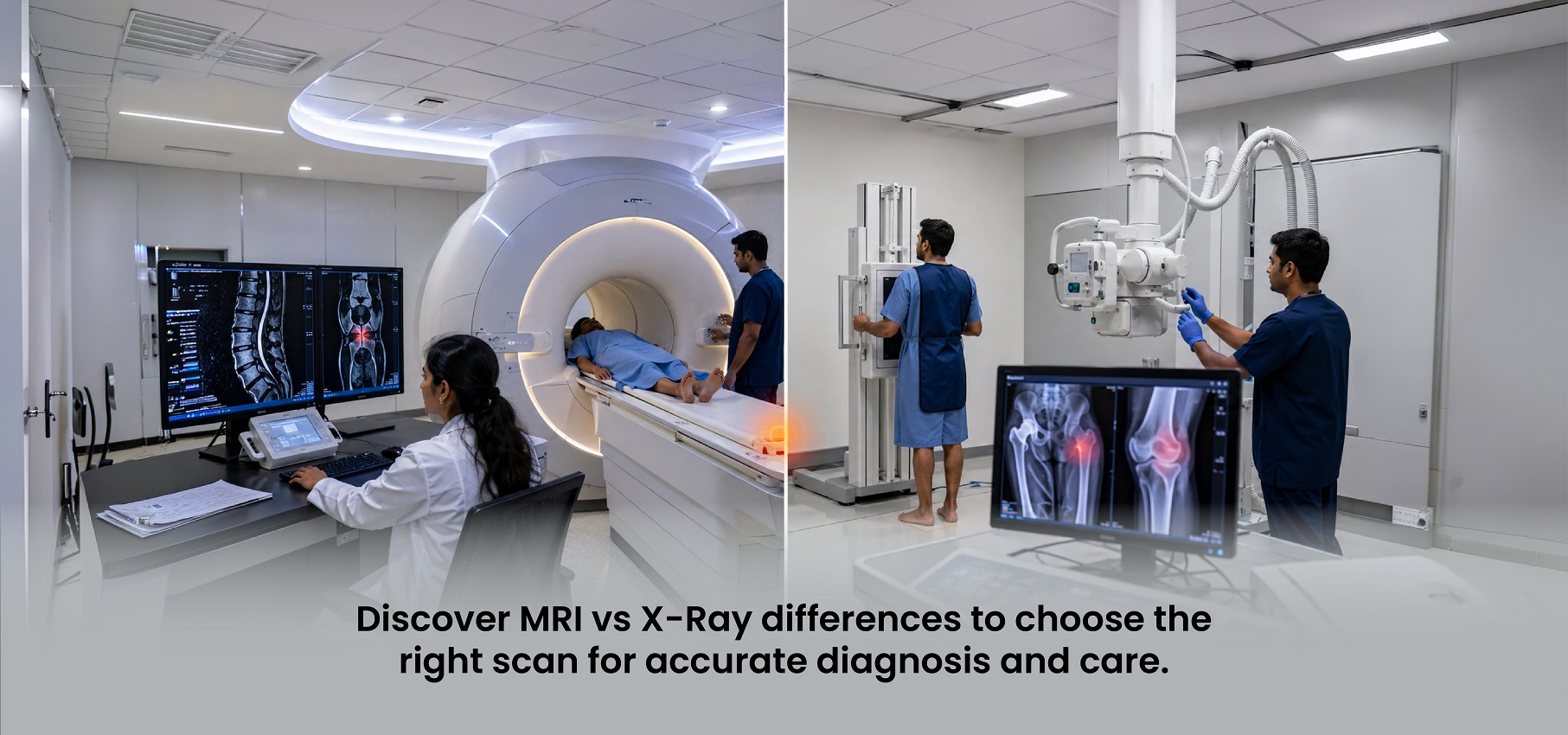
MRI and X-Ray are both diagnostic imaging tests, but they work very differently. An X-Ray uses radiation to capture images of bones, while an MRI uses magnetic fields to create detailed images of soft tissues like muscles, ligaments, and organs.
Choosing the right test depends on your symptoms, condition, and doctor’s advice. Using the wrong scan can delay diagnosis or increase unnecessary costs.
In this guide, you’ll understand the difference between MRI and X-Ray, when each is recommended, their cost in India, and how to decide which one is right for you.
What is the difference between MRI and X-Ray?
Understanding the difference between MRI and X-Ray starts with how each works. X-rays use radiation to produce bone imaging, making them ideal for detecting common types of fractures. MRI uses magnetic imaging — no radiation — offering superior soft tissue scan capability, revealing ligaments, cartilage, and nerves. As recognised by the Indian Radiological and Imaging Association (IRIA) and AIIMS Delhi, choosing the right diagnostic imaging depends entirely on what your doctor needs to see. MRI offers greater scan accuracy; X-ray offers speed.
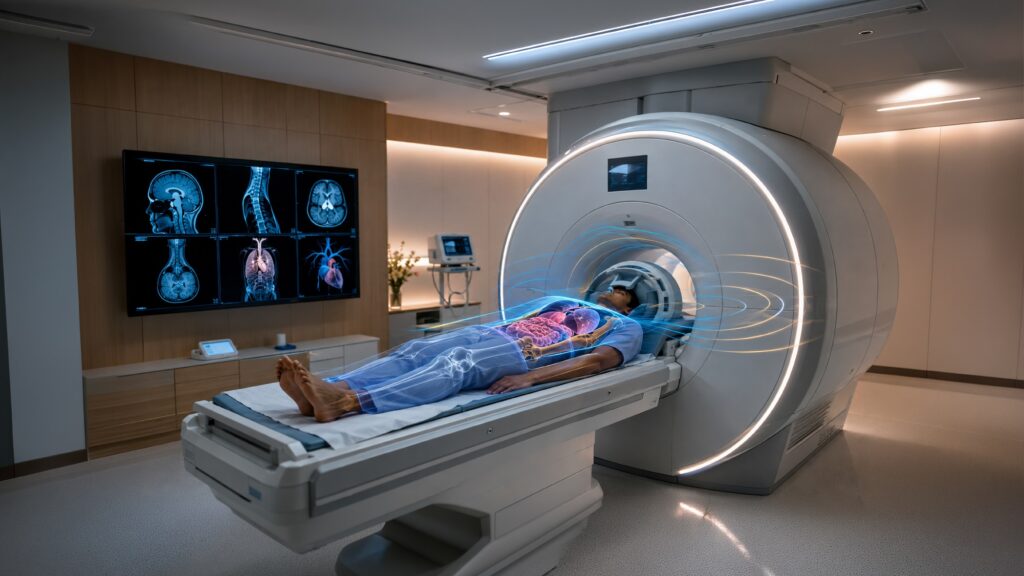
How MRI Works
MRI relies on a powerful magnetic field and radio waves to create detailed images of soft tissues, joints, and organs. With zero radiation exposure, it’s the preferred medical scan type for complex musculoskeletal and neurological conditions, as endorsed by WHO India guidelines.
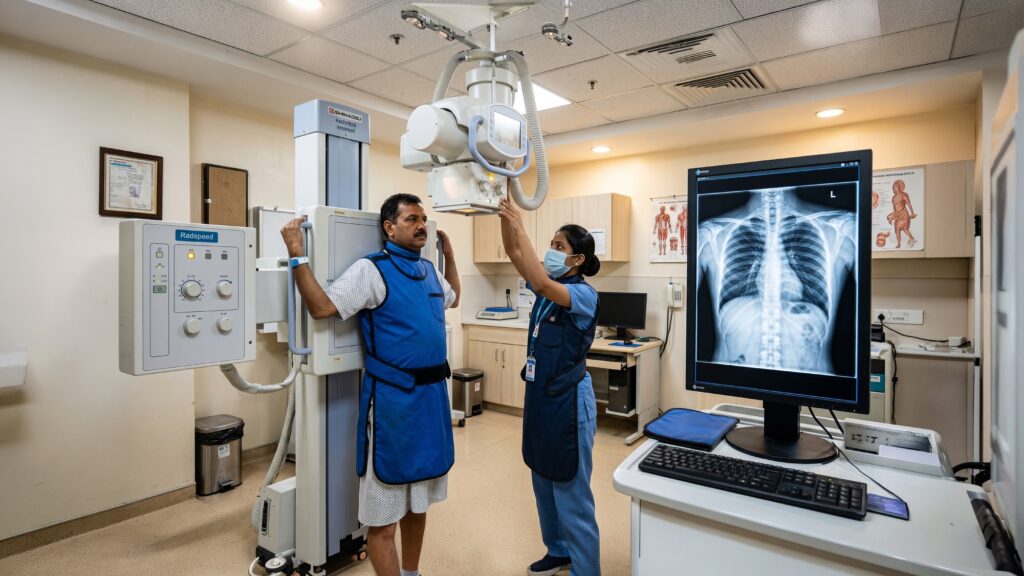
How X-Ray Works
X-rays pass radiation through the body, capturing bone imaging on a detector. Quick, cost-effective, and widely available, they remain the first-choice diagnostic imaging tool for fractures and structural bone assessment though limited in soft tissue scan visibility.
Real Data
According to estimates referenced by the Indian Council of Medical Research, over 70% of fractures in India are initially diagnosed using X-rays due to their speed, accessibility, and effectiveness.
Case Example:
A 45-year-old patient had a normal X-ray after a knee injury, but persistent pain led his orthopaedic doctor to recommend an MRI which revealed a torn ligament requiring immediate treatment.
Which is better: X-Ray or MRI for your condition?
Which is better — X-ray or MRI? Honestly, it depends entirely on your diagnosis. Doctors recommend X-ray for fractures and bone injuries — it’s quick and effective for orthopaedic diagnosis. MRI is preferred for ligaments, spine, and brain conditions where soft tissue detail matters. Leading institutions like Apollo Hospitals and Fortis Healthcare follow the same imaging test selection approach. Always trust your doctor’s scan recommendation over assumptions — the best medical imaging choice is the right one for your condition.
MRI vs X-Ray comparison table
Understanding the difference between MRI and X-ray can help you choose the right scan for faster and more accurate diagnosis.
| Feature | X-Ray | MRI |
| Technology | Uses radiation to capture bone images | Uses magnetic fields and radio waves for detailed imaging |
| Best For | Fractures, bone injuries, chest scans | Ligaments, spine, brain, muscles, soft tissues |
| Scan Time | Usually 5–15 minutes | Around 20–60 minutes |
| Cost in India | Lower cost | Higher cost |
| Accuracy | Excellent for bones | Highly detailed for soft tissues |
| Safety | Uses low radiation exposure | No radiation involved |
| Speed vs Detail | Faster results, less detail | Slower scan, more detailed imaging |
| Pros | Quick, affordable, widely available | Detailed diagnosis, better soft tissue visibility |
| Cons | Limited soft tissue visibility | Expensive, longer procedure time |
| Ideal Use Cases | Bone fractures, dental scans, arthritis | Sports injuries, slipped discs, brain and joint conditions |
According to National Health Portal India and Indian Council of Medical Research, choosing the right diagnostic tool depends on the condition being evaluated. Many hospitals with NABH Accreditation follow strict imaging protocols to ensure accurate and safe diagnosis.
MRI vs X-Ray cost in India (₹) and availability
When comparing MRI versus X-ray, cost matters. X-rays range ₹200–₹1,000; MRI scans cost ₹4,000–₹12,000 depending on contrast and body part. AIIMS Delhi and government hospitals offer subsidised rates, while the Ayushman Bharat Scheme covers eligible patients — making healthcare cost India-wide more accessible than most assume.
Cost Comparison in Metro Cities vs Smaller Towns
Scan cost India-wide varies sharply. Affordable MRI in metros averages ₹6,000–₹12,000; smaller towns offer the same at ₹4,000–₹7,000. X-ray imaging test prices stay low everywhere — the most budget-friendly diagnostic centre pricing option across Tier 1 and Tier 2 cities.
When do doctors recommend MRI or X-Ray? (Symptoms-Based Guide)
Understanding how MRI is different from X-ray becomes clearer through symptoms. Fractures, chest issues, and fracture detection call for an X-ray — fast and effective. Persistent back pain, ligament tears, or brain MRI scan needs to point firmly toward MRI for spine imaging accuracy. A knee injury scan after a sports accident may need both. Experts at Dr. Siddharth Reddy say that ignoring or misjudging symptoms can delay proper care and recovery.
Symptoms That Need an X-Ray
- Suspected fractures or broken bones
- Chest infections or lung conditions
- Joint misalignment or bone deformity
- Dental issues or sinus problems
Symptoms That Need an MRI
- Severe or persistent back pain
- Ligament or tendon tears (knee injury scan)
- Brain MRI scan for headaches, seizures, or neurological symptoms
- Spine imaging for disc herniation or nerve compression
Are MRI and X-Ray safe? Risks and precautions explained
Understanding what is the difference between MRI and X-ray includes knowing their safety profiles. X-rays involve low radiation risk — generally safe but used cautiously for pregnant women and children. MRI carries no radiation risk whatsoever, though metal implants, pacemakers, and certain surgical devices make it unsafe for some patients. The Atomic Energy Regulatory Board (AERB) and WHO India regulate diagnostic safety standards nationally. The Ministry of Health and Family Welfare advises all patients to disclose full medical history before any imaging procedure.
X-Ray Safety and Radiation Risk
- Low radiation exposure — safe for most adults
- Avoid repeated scans without medical necessity
- Pregnant women and children require extra precaution
- AERB regulates imaging risks across Indian diagnostic centres
MRI Precautions You Must Know
- No radiation — generally considered the safer scan
- Patients with pacemakers or metal implants must avoid MRI
- Inform your doctor about any surgical implants beforehand
- Claustrophobic patients may need an open MRI alternative
- Always follow WHO India and facility-specific MRI precautions before scanning
FAQ
What is the main difference between MRI and X-Ray?
MRI uses magnetic fields to create detailed images of soft tissues like muscles and organs, while X-Ray uses radiation to capture images of bones. MRI provides more detailed images, but X-Rays are faster and commonly used for fractures and chest conditions.
Which is better for knee pain: MRI or X-Ray?
For knee pain, an X-Ray is usually done first to check for bone issues. If the pain is due to ligament injury or cartilage damage, an MRI is more effective. Doctors in India often recommend MRI if X-Ray results are normal but symptoms continue.
What is the cost of MRI and X-Ray in India?
An X-Ray typically costs between ₹200 and ₹1,000, depending on the body part and city. An MRI scan can cost between ₹4,000 and ₹12,000. Prices vary based on hospital type, location, and whether contrast is used.
Is MRI safer than X-Ray?
MRI is generally safer as it does not use radiation. However, it is not suitable for patients with metal implants or pacemakers. X-Rays involve low radiation exposure, but repeated scans should be avoided unless necessary.
CONCLUSION
MRI and X-Ray serve different purposes, and choosing the right scan depends on your symptoms and medical condition. Understanding their differences helps you avoid unnecessary costs and delays in diagnosis.
If you’re unsure which scan you need, book a consultation with a qualified doctor today and get the right diagnosis at the right time.