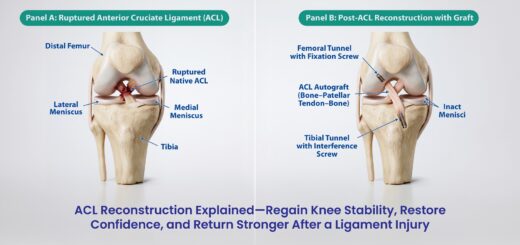
Knee Pain: What It Is, Causes, Treatment & Relief
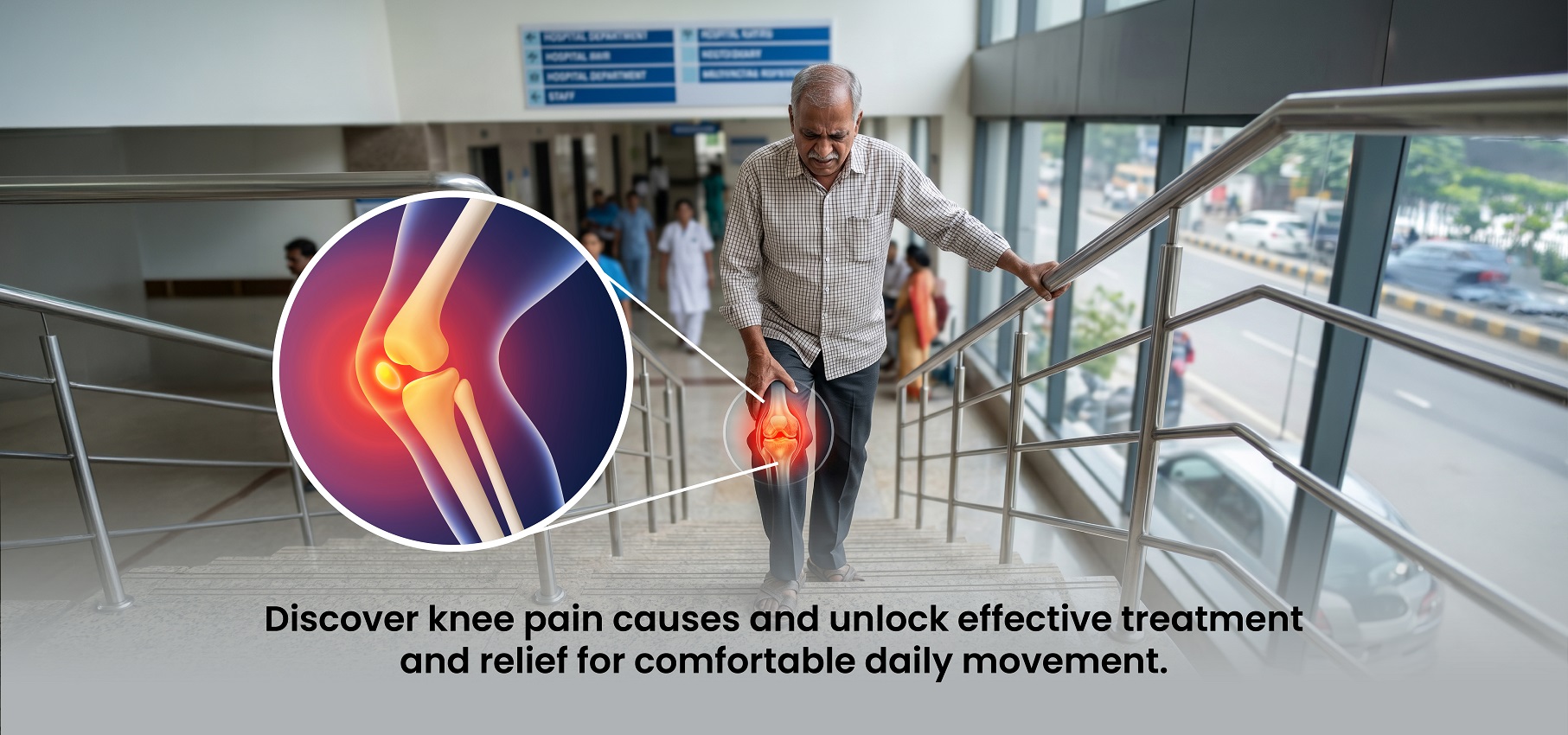
Knee pain is a common condition that can occur due to injury, ageing, arthritis, or overuse. It may cause swelling, stiffness, or difficulty in walking and can affect people of all ages.
If you are wondering what causes knee pain and how to treat it, the good news is that most cases can be managed with proper diagnosis, exercises, and timely medical care.
In this guide, you will learn the exact causes, symptoms, treatment options, home remedies, and when to consult a doctor for knee pain in India.
What Is Knee Pain and What Are Its Common Symptoms?
Knee pain can be temporary after an injury, common fractures, or become chronic due to conditions affecting the joint. Common knee pain symptoms include swelling in the knee, joint stiffness, redness, instability, and ongoing knee discomfort. Pain may occur at the front, side, or behind the knee joint, often causing mobility issues while walking or climbing stairs. According to the Indian Orthopaedic Association, AIIMS Delhi, and Apollo Hospitals, early treatment helps reduce inflammation and improve movement.
What Causes Knee Pain?
Knee pain rarely appears without reason. Ligament injury, cartilage damage, osteoarthritis knee conditions, gout, and sports injury are common triggers. Prolonged sitting, obesity, and age-related wear and tear add further stress to the joint. The Ministry of Health and Family Welfare, WHO India, and Fortis Healthcare all recognise lifestyle factors as significant knee strain contributors among Indians today.
Common Medical Conditions Behind Knee Pain
- Osteoarthritis knee — cartilage damage from gradual wear
- Rheumatoid arthritis — autoimmune condition causing joint inflammation.
- Gout — uric acid crystals causing sudden severe pain
- Bursitis — inflamed fluid sacs around the knee
- Ligament injury — ACL or MCL tears from sports injury
Causes of Pain Behind and Under the Knee Joint
- Runner’s knee — cartilage damage under the kneecap
- Baker’s cyst — fluid buildup causing behind-knee tightness
- Hamstring strain — knee strain from muscle overuse
- PCL injury — ligament injury at the back of the joint
- Deep vein thrombosis — requires urgent medical attention
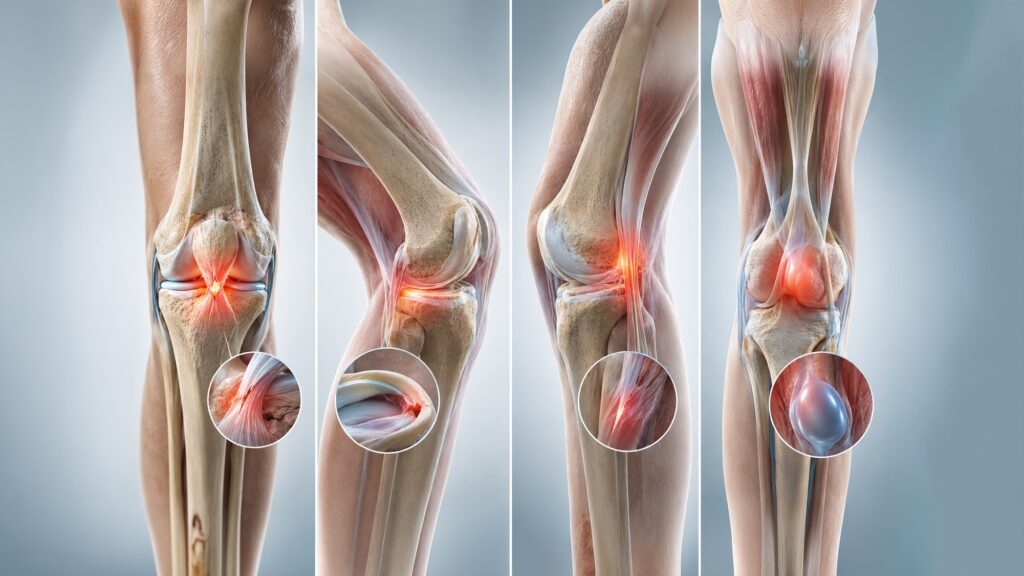
Knee Pain Causes by Location (Quick Comparison Table)
Understanding knee joint pain caused by location helps identify what might be happening though this is a general guide, not a medical diagnosis. Always consult a specialist like AIIMS or a qualified orthopaedic doctor for accurate assessment.
| Pain Location | Possible Cause |
| Front of knee | Runner’s knee, patellar pain, patellar tendinitis |
| Inner knee pain | MCL ligament strain, medial meniscus tear |
| Outer knee pain | IT band syndrome, LCL ligament strain |
| Pain behind knee | Baker’s cyst, PCL injury, hamstring strain |
| Pain under knee joint | Patellar tendinitis, Osgood-Schlatter disease |
| All-over knee pain | Osteoarthritis, rheumatoid arthritis, gout |
As guidance from the NHS, Mayo Clinic, and AIIMS confirms — self-diagnosis can delay proper treatment. Always seek professional evaluation for persistent knee joint pain causes.
How to Treat Knee Pain? (Medical & Home Remedies)
Knee pain treatment starts at home — the RICE method (Rest, Ice, Compression, Elevation) delivers quick knee pain relief for mild injuries. Pain management with anti-inflammatory medications helps reduce swelling. The Indian Medical Association and Apollo Clinics recommend physiotherapy exercises for long-term joint therapy. Practo connects patients to specialists when home remedies aren’t enough for persistent pain.
Best Exercises for Knee Joint Pain Relief
- Straight leg raises — strengthen without joint strain
- Wall squats — build quad support around the knee
- Hamstring stretches — ease tension and improve flexibility
- Step-ups — improve stability through physiotherapy exercises
- Swimming or cycling — low-impact joint therapy options
When Surgery or Knee Replacement Is Needed
When knee pain treatment and physiotherapy exercises stop delivering results, advanced options become necessary:
- Corticosteroid or hyaluronic acid injections for pain management
- Arthroscopy for internal joint repair
- Partial or total knee replacement when cartilage damage is severe
The Indian Medical Association advises surgery only after all conservative knee pain relief options are exhausted.
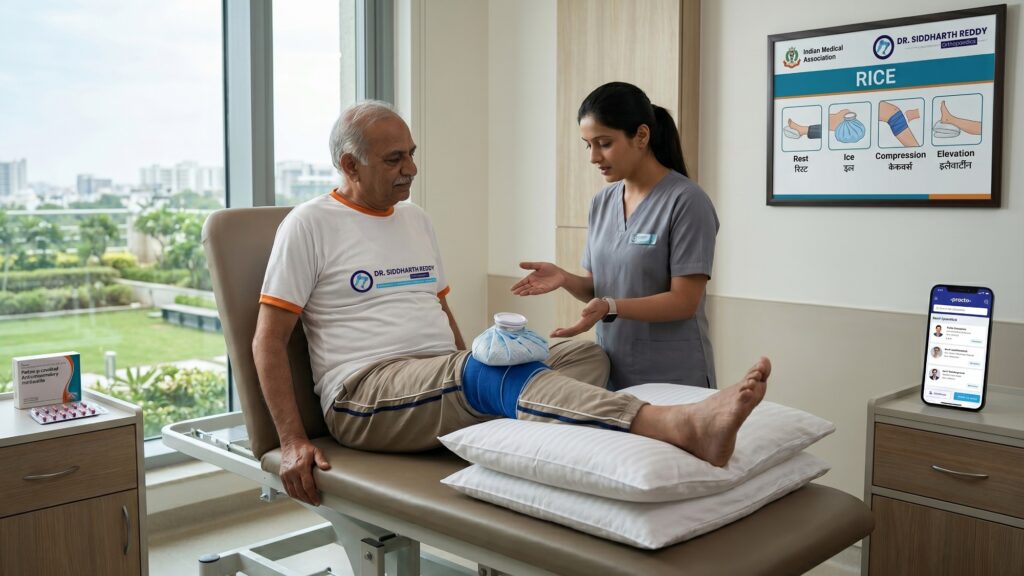
How to Reduce Knee Joint Pain at Home? (Simple Remedies)
Simple knee pain remedy options can make a real difference daily. Hot and cold therapy eases inflammation, while turmeric milk — backed by AYUSH Ministry India and Patanjali Ayurved — offers natural pain relief. Weight control and posture correction reduce joint stress significantly. The National Health Portal India recommends activity modification and knee strengthening exercises as effective home treatment for managing joint care long-term.
Do’s and Don’ts:
- Stretch daily, maintain healthy weight, use cold packs for swelling
- Try AYUSH-recommended turmeric and ginger remedies
- Avoid high-impact activities, prolonged sitting, and self-medicating
Real Data:
According to the Indian Council of Medical Research (ICMR), nearly 1 in 3 Indians over 40 experience knee pain linked to osteoarthritis making early joint diagnosis and timely orthopaedic consultation more important than ever.
Patient Case Example:
A 45-year-old office worker experiencing chronic knee pain after prolonged sitting was advised physiotherapy instead of surgery. After six weeks of targeted knee strengthening exercises and lifestyle changes, pain reduced significantly no medication or surgical intervention required.
When Should You See a Doctor for Knee Pain in India?
Don’t ignore persistent knee pain. Severe swelling, inability to walk, or pain lasting over a week are clear signals for knee joint pain diagnosis. Consultation with an orthopaedic doctor costs ₹500–₹2,500; knee scan (X-ray or MRI) ranges ₹500–₹5,000. At Dr. Siddharth Reddy, early joint diagnosis helps detect problems sooner and avoid complicated treatment later.
FAQ
What is the most common cause of knee pain in India?
The most common cause of knee pain in India is osteoarthritis, especially in people above 40. It happens due to wear and tear of the knee joint. Other causes include injuries, obesity, and poor posture. Early diagnosis and lifestyle changes can help manage the condition effectively.
How can I get relief from knee pain at home?
You can reduce knee pain at home by resting the joint, applying ice packs, and avoiding heavy activities. Simple exercises, weight control, and using knee support can also help. However, if pain continues for more than a week, consult a doctor for proper treatment.
Which doctor should I consult for knee pain in Kolhapur?
You should consult an orthopaedic doctor for knee pain in Kolhapur. They can diagnose the exact cause using physical examination and tests like X-rays or MRI. Early consultation helps prevent worsening of the condition and ensures faster recovery.
What are the symptoms of serious knee pain?
Serious knee pain may include swelling, redness, inability to walk, severe pain, or a popping sound during injury. If you experience these symptoms, it is important to seek medical help immediately to avoid complications or long-term damage.
How much does knee pain treatment cost in India?
Knee pain treatment in India can cost between ₹500 and ₹2,000 for consultation. Diagnostic tests like X-rays or MRI may cost ₹1,000 to ₹5,000. Advanced treatments like surgery can be more expensive depending on the hospital and condition.
CONCLUSION
Knee pain can affect your daily life, but with the right diagnosis and timely treatment, it can be effectively managed. Understanding the cause is the first step towards long-term relief.
Don’t ignore persistent knee pain. Book a consultation with an experienced orthopaedic specialist today and get personalised treatment for faster recovery.