Swollen Feet in Seniors: Common Causes of Swelling in Legs and Feet
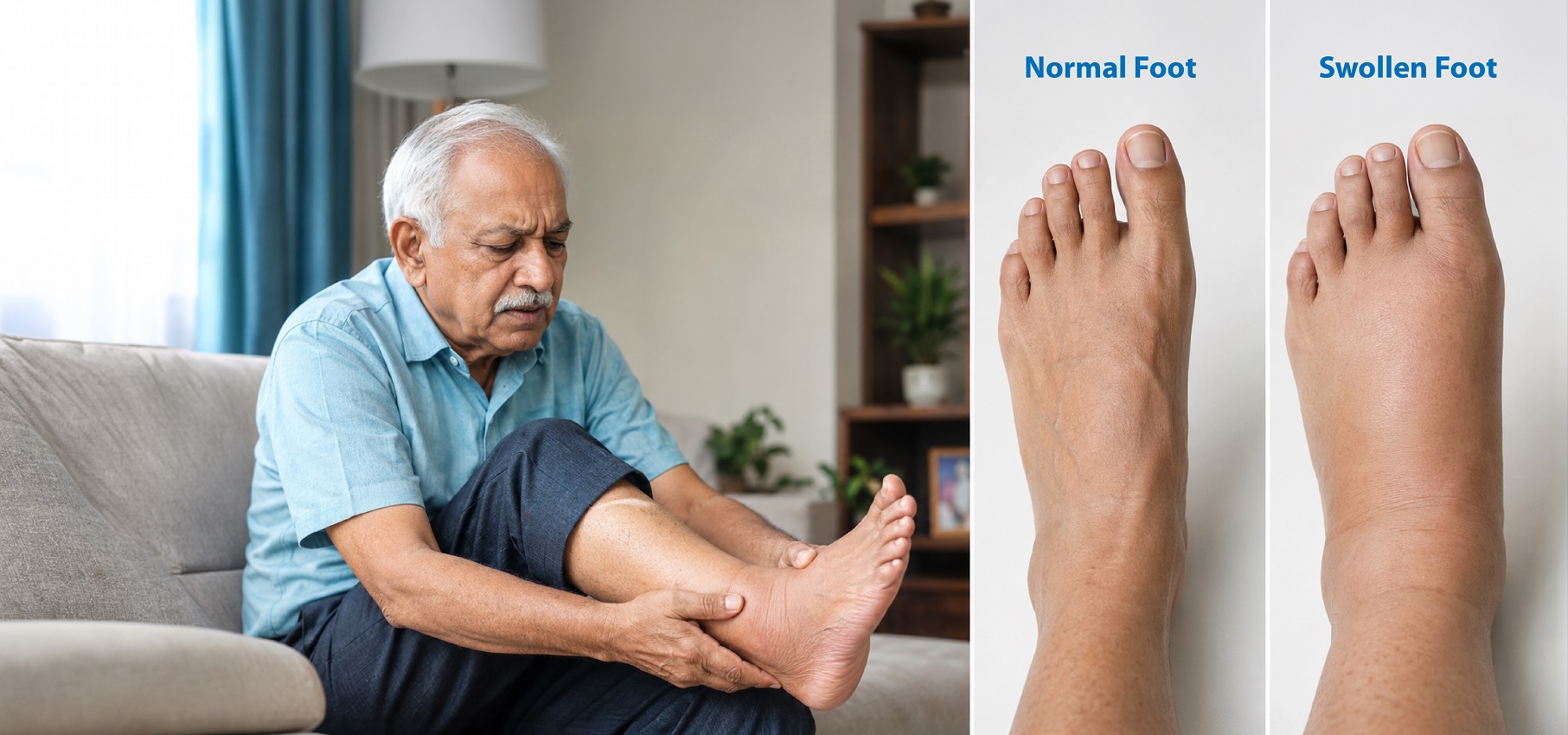
Swollen feet in seniors are often caused by fluid buildup (oedema), poor circulation, prolonged sitting or standing, certain medical conditions, or medications. While mild swelling may improve with rest and leg elevation, persistent or painful swelling in the legs and feet should be evaluated by a doctor to identify the underlying cause and begin appropriate treatment.
If you or an elderly family member has noticed swollen feet or ankles, understanding the reason behind the swelling is important. This guide explains the common causes, symptoms, diagnosis, treatment options, costs in India, and when it’s time to seek medical care.
Research suggests that chronic peripheral oedema affects approximately 19–20% of older adults and becomes increasingly common with advancing age. It is strongly associated with conditions such as diabetes, obesity, hypertension, reduced physical activity, and mobility limitations. Early diagnosis is essential to identify the underlying cause, initiate appropriate treatment, and help prevent complications such as skin infections, ulcers, and reduced mobility (Besharat et al., 2021).
Source: Peripheral edema – PLOS One.
Reasons for Swelling in Legs and Feet: Medical and Lifestyle Causes
Reasons for swelling in legs and feet generally fall into two categories: an underlying medical condition, or a lifestyle factor that leads to fluid accumulation in the lower limbs.
Medical Causes
- Venous insufficiency and varicose veins — when the valves in leg veins weaken, blood pools in the lower legs instead of returning efficiently to the heart, causing visible swelling and, over time, visible varicose veins
- Heart, kidney, and liver conditions — heart disease can cause fluid to back up in the legs when the heart can’t pump efficiently; kidney disease reduces the body’s ability to remove excess fluid and sodium; liver conditions lower protein levels needed to keep fluid inside blood vessels, all leading to leg oedema
- Arthritis and joint inflammation — inflammatory joint conditions, especially affecting the knee or ankle, often cause localized swelling around the joint itself rather than the whole limb
- Deep Vein Thrombosis (DVT) — a blood clot in a deep leg vein is a more urgent cause of sudden one-sided swelling, and needs prompt medical attention rather than home management
Lifestyle-Related Causes
- Medicines — certain blood pressure medications, steroids, and anti-inflammatory drugs are known to cause fluid retention as a side effect
- Prolonged standing or sitting — gravity alone causes fluid to pool in the lower legs when circulation isn’t actively assisted by movement
- Obesity — higher BMI puts sustained extra pressure on leg veins and joints, contributing to both venous insufficiency and joint-related swelling over time
Swelling with a joint-pain component — particularly around the knee — often overlaps with arthritis-driven causes rather than a purely circulatory or organ-related one, and is worth distinguishing early since the management approach differs.
What Are the Symptoms of Swelling in Feet and Ankles?
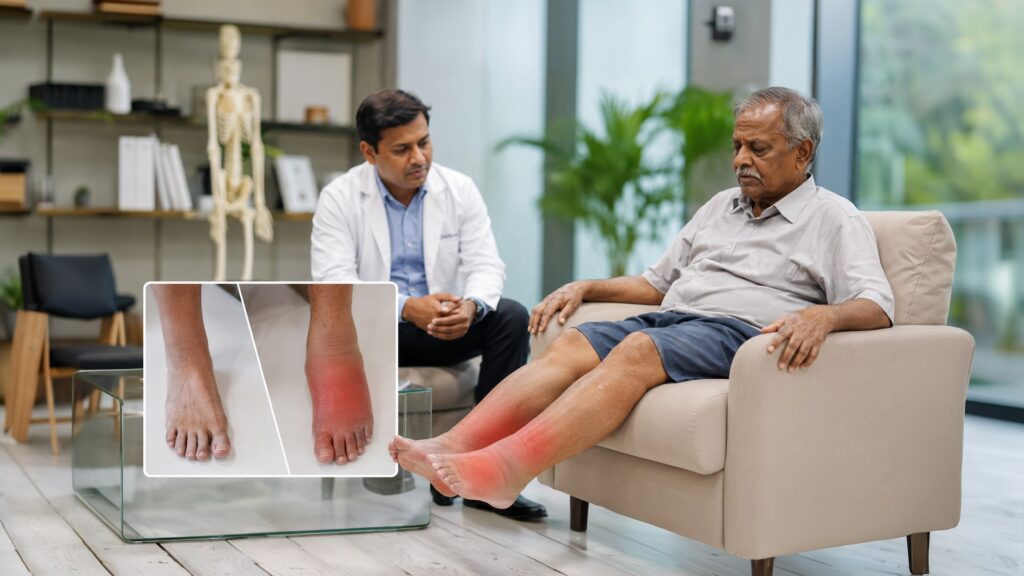
Swelling in feet and ankles may appear as puffy feet, tight skin, or visible enlargement around the foot, ankle, and lower limb due to peripheral oedema. Some people also experience ankle pain, heaviness in the legs, leg discomfort, and reduced mobility, making it difficult to walk, climb stairs, or wear shoes comfortably. Swelling in one foot may result from an injury, infection, or a blood clot, while swelling in both feet is more commonly linked to fluid retention, poor circulation, medications, or underlying medical conditions. Seek immediate medical attention if swelling develops suddenly, is painful, accompanied by redness, fever, chest pain, or shortness of breath.
Patient Experience: An elderly patient in their early 70s visited our clinic with persistent swelling in both feet that had not improved with rest. After evaluation, venous insufficiency was diagnosed. With compression therapy, walking exercises, and lifestyle changes, the swelling reduced significantly over the following weeks.
How Is Swelling in Legs and Feet Diagnosed?
Diagnosing swelling in legs and feet begins with a detailed physical examination to assess the location, severity, and possible cause of the swelling. Your doctor may recommend blood tests from a NABL Accredited Laboratory to evaluate kidney, liver, thyroid, or heart function. A Doppler Ultrasound helps assess blood flow and detect vein-related conditions such as deep vein thrombosis or venous insufficiency. If joint problems or fractures are suspected, diagnostic imaging such as X-rays or MRI may be advised. In cases where joint degeneration is identified as the underlying cause, Knee Replacement Surgery may be recommended as a long-term treatment option. Depending on the findings, an Orthopaedic Surgeon or Vascular Specialist may perform further circulation assessment and vascular examination.
Differential Diagnosis Table
| Condition | Typical Features |
| Venous insufficiency | Worse by evening, improves with leg elevation |
| DVT | One-sided swelling, pain, warmth |
| Arthritis | Joint swelling, stiffness, pain |
| Heart failure | Both legs swollen, breathlessness |
| Kidney disease | Puffy feet and facial swelling |
| Liver disease | Leg swelling with abdominal swelling |
| Lymphedema | Firm swelling, skin thickening |
Tests Your Doctor May Recommend
Your doctor may recommend blood tests, a Doppler ultrasound, X-rays, or MRI based on your symptoms. These investigations help identify circulatory, joint, or underlying medical conditions causing swelling.
When Should You Visit a Specialist?
Consult an Orthopaedic Surgeon or Vascular Specialist if swelling persists, worsens, affects mobility, or is accompanied by severe pain, redness, fever, breathlessness, or sudden one-sided leg swelling.
How to Reduce Swelling in Feet?
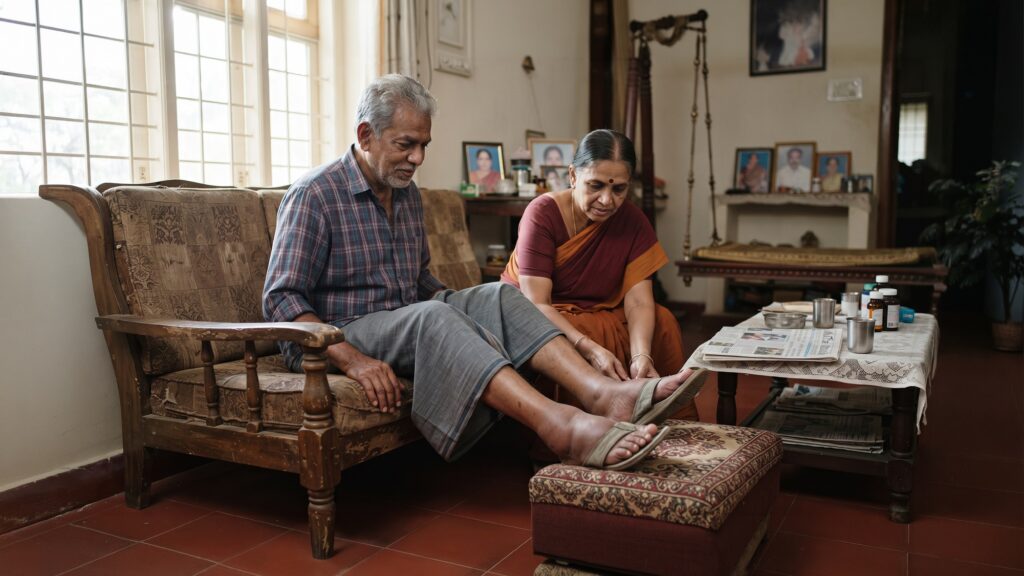
Knowing how to reduce swelling in feet depends on identifying the underlying cause. Mild swelling often improves with simple measures such as leg elevation, regular exercise, salt restriction, and wearing Compression Stockings. When swelling is related to poor circulation, arthritis, or another medical condition, your doctor may recommend physiotherapy, medicines, or, in some cases, surgery. An experienced Physiotherapist can help improve mobility and circulation through guided exercises, and is often the first step in addressing knee joint pain alongside swelling-related concerns. Treatment at a NABH Hospital may also be covered under eligible government schemes such as Ayushman Bharat, depending on the diagnosis and procedure required.
| Treatment | Best For | Recovery | Approx. Cost (₹) |
| Compression Stockings | Poor circulation | Ongoing | ₹500–₹3,000 |
| Physiotherapy | Mobility issues | Few weeks | ₹500–₹2,000/session |
| Medicines | Medical conditions | Variable | ₹100–₹3,000/month |
| Surgery (if needed) | Vein or joint disorders | Few weeks | ₹40,000–₹2 lakh+ |
Home Remedies That Help
- Elevate your legs above heart level for 20–30 minutes several times daily.
- Walk regularly to improve blood circulation and reduce fluid buildup.
- Perform gentle ankle and foot exercises to encourage healthy blood flow.
- Reduce salt intake to minimise fluid retention in the body.
- Wear properly fitted compression stockings if recommended by your doctor.
- Avoid prolonged sitting or standing by changing positions frequently.
- Maintain a healthy weight, since feet swelling in old age often worsens with excess pressure on the legs and feet.
- Stay well hydrated, as proper hydration supports healthy circulation.
FAQ
Q1. What causes swelling in legs and feet in older adults?
Swelling in the legs and feet can occur due to fluid retention, poor blood circulation, prolonged sitting or standing, arthritis, or medical conditions affecting the heart, kidneys, or liver. Persistent swelling should be evaluated by a doctor to identify the exact cause and recommend suitable treatment.
Q2. How can I reduce swelling in my feet at home?
Mild swelling may improve by elevating your legs, walking regularly, avoiding prolonged standing, reducing salt intake, and wearing compression stockings if advised by your doctor. However, if swelling persists, becomes painful, or is accompanied by redness or breathlessness, seek medical care promptly.
Q3. Is swelling in both feet a sign of a serious problem?
Swelling in both feet is often linked to fluid retention, poor circulation, or chronic medical conditions. Although it may not always be serious, persistent swelling, especially with shortness of breath or chest pain, requires immediate medical evaluation to rule out heart or kidney problems.
Q4. Which doctor should I consult for swollen feet in Hyderabad?
If you have swollen feet in Hyderabad, start by consulting an orthopaedic specialist or a physician. Depending on the cause, you may also be referred to a vascular specialist, cardiologist, or nephrologist for further evaluation and treatment.
Q5. When should seniors see a doctor for swollen feet?
Older adults should seek medical attention if swelling lasts for more than a few days, affects both legs, becomes painful, causes skin colour changes, or is associated with fever, breathlessness, or difficulty walking. Early diagnosis helps prevent complications and improves treatment outcomes.
Conclusion
Swollen feet in seniors can result from ageing, lifestyle factors, or underlying medical conditions. Identifying the cause early allows timely treatment, reduces discomfort, and helps prevent serious complications.
If you or a loved one has persistent swelling in the legs or feet, book a consultation with an experienced orthopaedic specialist for a thorough evaluation and a personalised treatment plan.