Hip Fracture Symptoms You Should Never Ignore

Hip fracture symptoms include severe pain in the hip or groin, difficulty standing or walking, swelling, and inability to move the leg normally. These symptoms often occur after a fall or injury and need immediate medical attention.
Ignoring these signs can lead to serious complications. In this guide, you’ll learn the warning symptoms, causes, treatment options, recovery time, and when to consult a doctor in India. For complete support and treatment options, explore our orthopedic hip fractures care to understand expert diagnosis, advanced treatment, and recovery guidance.
What is a Hip Fracture?
A hip fracture, also known as a hip bone fracture or hip joint fracture, is a break in the upper part of the thigh bone (femur) near the hip joint. The hip works like a ball-and-socket joint that allows smooth movement, but a hip injury can disturb this function. The main types of hip fractures include femoral neck fractures and intertrochanteric fractures. Understanding what is a hip fracture is important for early diagnosis and treatment. According to experts from the Indian Orthopaedic Association and AIIMS Delhi, weak bones increase the risk significantly.
Key Statistics
Hip fractures are common among elderly patients due to osteoporosis, which reduces bone density and increases the risk of fractures. As highlighted in a technical report by the World Health Organization, osteoporosis is characterized by low bone mass and skeletal fragility, and most fractures in older adults—including hip fractures—are directly linked to this reduced bone density.
What Are the Symptoms of a Hip Fracture You Should Never Ignore?
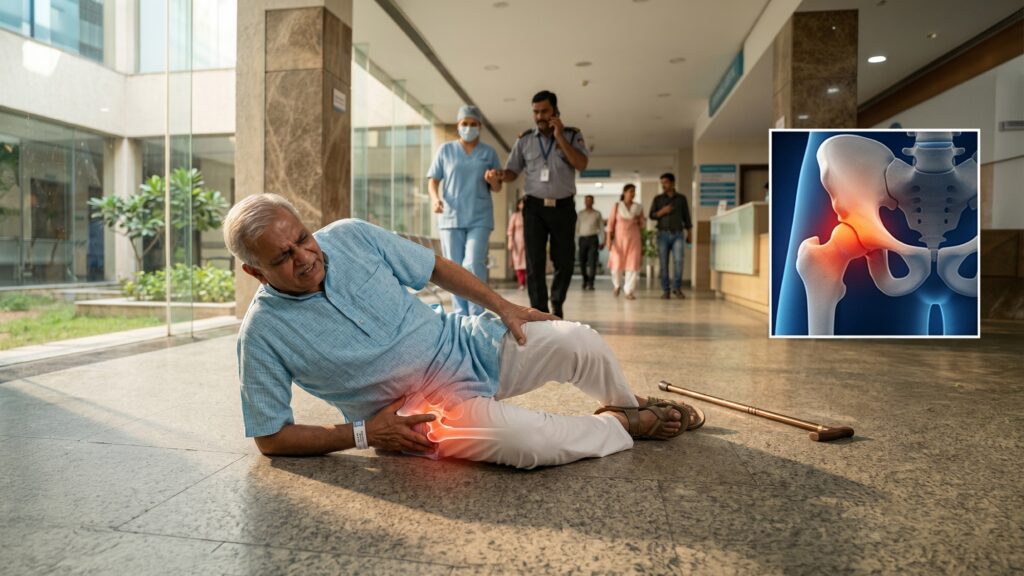
A hip fracture is a serious injury that requires immediate medical attention. Hip fracture symptoms include severe hip or groin pain, inability to stand or walk, and noticeable swelling hip joint with bruising. After a fall, hip pain after fall and mobility issues should not be ignored. In many cases, the leg may appear shorter or turned outward. These broken hip symptoms can worsen quickly, leading to severe hip pain and complications.
What Causes Hip Fractures? Risk Factors Explained
The causes of hip fractures are often linked to everyday risks and underlying bone conditions. Common factors include:
- Falls: The most common reason, especially increasing fracture risk elderly
- Osteoporosis: Bone weakness causes, and bone density issues make bones fragile; hip fractures are common in elderly patients due to osteoporosis
- Road accidents and trauma: Major injury causes hip and accident hip fracture cases
- Age & lifestyle: Inactivity, poor nutrition, and weak bones increase risk
As highlighted by the WHO bone health guidelines and the Indian Council of Medical Research (ICMR), maintaining bone health is essential for prevention.
How is a Hip Fracture Diagnosed?
Diagnosis begins with a physical examination where the doctor checks pain, swelling, leg position, and mobility. Imaging tests are essential, with a hip fracture X-ray usually done first to confirm the injury. If not clearly visible, advanced fracture diagnosis methods like an MRI scan of the hip or a CT scan of the fracture help detect hidden fractures. Early bone injury diagnosis is crucial to prevent complications and begin timely treatment. Seek emergency care if there is severe pain, inability to walk, or visible deformity, as prompt diagnosis improves recovery outcomes.
Hip Fracture Treatment Options (Surgery vs Non-Surgical Care)
Hip fracture treatment depends on severity, age, and overall health. Most cases need hip fracture surgery, such as joint replacement surgery or fracture fixation, common in orthopedic surgery hip. Non-surgical care is limited to stable fractures. Early treatment options for fractures reduce complications, while delays increase risks. As noted by the Indian Orthopaedic Association and AIIMS Delhi, timely care is essential.
When is Hip Fracture Surgery Required?
Hip fracture surgery is usually needed when the bone is displaced (out of position) and cannot heal properly on its own. It is also required if the pain is severe and prevents standing or walking. Surgery helps restore mobility and reduces complications from prolonged immobility.
Hip Fracture Treatment Comparison Table
The table below highlights the key differences between surgical and non-surgical hip fracture treatment options for better understanding and decision-making.
| Feature | Surgery (Hip Fracture Surgery) | Non-Surgical Treatment |
| Suitable for | Most hip fractures | Minor/stable fractures |
| Procedure | Joint replacement surgery or fracture fixation | Bed rest, medication |
| Recovery Time | Faster recovery | Slower healing |
| Mobility | Early movement possible | Limited Mobility |
| Risk | Surgical risks present | Risk of complications if untreated |
Hip Fracture Recovery Time & Rehabilitation
Hip fracture recovery typically takes 3–6 months or longer, depending on age and overall health. Fractured hip recovery time improves with proper rehab after hip surgery and guided physiotherapy hip fracture programs. Mobility exercises help restore strength, balance, and walking ability. Early movement is important for faster hip fracture recovery and to avoid complications. Experts from the Indian Association of Physiotherapists and Physiotherapy India Clinics recommend consistent therapy. Tips include regular exercises, a healthy diet, fall prevention, and following medical advice for better mobility recovery.
Patient Case Example
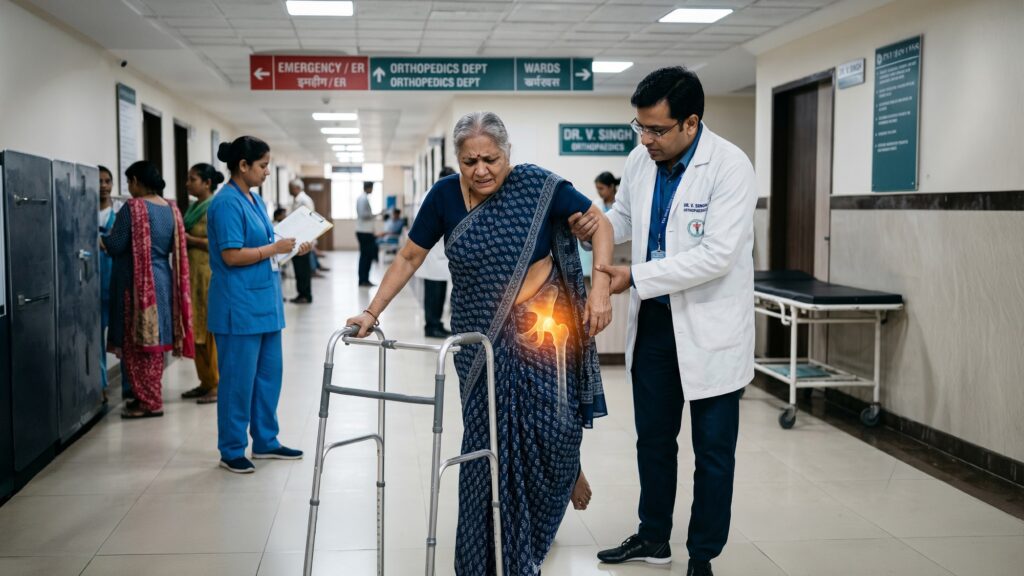
An elderly patient following hip surgery showed steady improvement through guided rehabilitation and physiotherapy. The recovery process included assisted walking and gradual mobility exercises. Over time, the patient achieved functional recovery and improved quality of life.
Cost of Hip Fracture Treatment in India
Hip fracture surgery cost in India varies based on hospital, city, and treatment type. Consultation fees usually range from ₹500–₹2000. Diagnostic tests like X-rays, MRI, or CT scans add to the fracture treatment cost in India. Hip surgery cost in India typically ranges between ₹1.5 lakh to ₹5 lakh, depending on the procedure and implants. Orthopedic surgery charges may also include hospital expenses in India, such as room, medicines, and rehabilitation. An orthopaedic surgeon specialising in trauma and fractures can guide the most appropriate and cost-effective treatment plan.
FAQ
What are the first signs of a hip fracture?
The first signs include severe pain in the hip or groin, difficulty standing, and limited movement of the leg. You may also notice swelling or bruising. These symptoms usually occur after a fall or injury and need immediate medical attention.
How long does it take to recover from a hip fracture in India?
Recovery usually takes 3 to 6 months, depending on the patient’s age, health, and treatment. Physiotherapy plays a key role in regaining strength and mobility after surgery or treatment.
What is the cost of hip fracture surgery in India?
Hip fracture surgery in India typically costs between ₹1.5 lakh and ₹5 lakh. The cost depends on the hospital, type of surgery, and the surgeon’s experience. Insurance may cover part of the expenses.
Can a hip fracture heal without surgery?
In some minor cases, non-surgical treatment may be possible. However, most hip fractures require surgery to ensure proper healing and restore mobility. A doctor will decide the best treatment based on the severity of the fracture.
When should I see a doctor for hip pain after a fall in India?
You should see a doctor immediately if you cannot stand, walk, or move your leg after a fall. Severe pain, swelling, or visible deformity are emergency signs that require urgent medical care.
CONCLUSION
Hip fracture symptoms should never be ignored, especially after a fall or injury. Early diagnosis and treatment can prevent serious complications and improve recovery outcomes.
If you or a loved one is experiencing hip pain or difficulty walking, consult an experienced orthopaedic surgeon for proper evaluation. You can also book a consultation with Dr. Siddharth Reddy for expert care and timely treatment.
About the Medical Reviewer
Medically Reviewed by Dr. Siddharth Reddy
Consultant Orthopedic Surgeon with 10+ years of experience in joint replacement, arthroscopy, and sports injury treatment. Known for evidence-based care and patient-focused recovery.
Learn more about the doctor: Dr Siddharth Reddy