What You Need to Know About Heel Pain
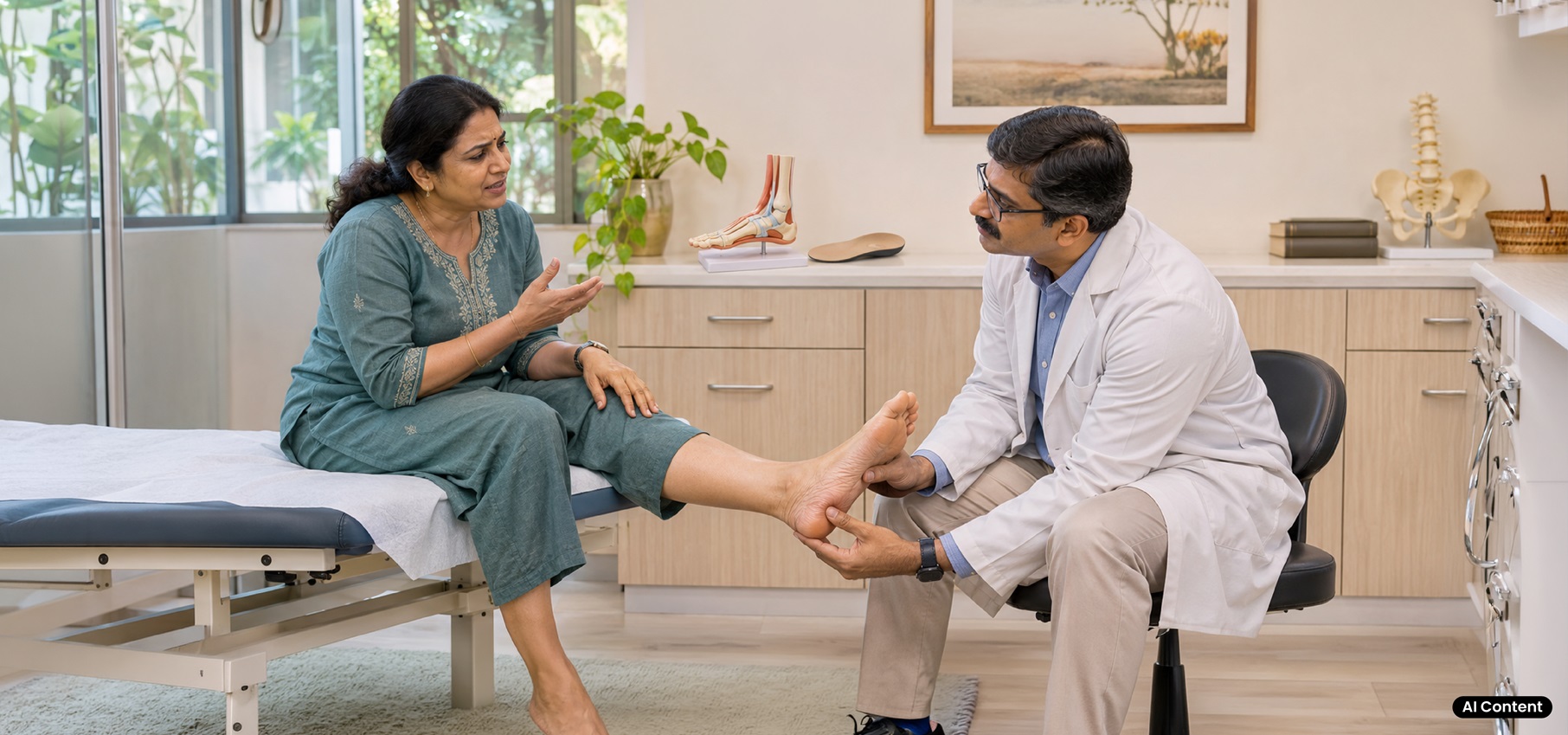
Heel pain is discomfort felt around the bottom, back or sides of the heel, and it can result from conditions such as plantar fasciitis, Achilles tendon irritation, overuse or injury. The exact heel pain reason depends on where the pain occurs, when it appears and whether other symptoms, such as swelling or stiffness, are present. Mild pain often eases with rest, supportive footwear and gentle stretching, whereas pain that persists or is severe may need professional assessment. People who walk or stand for long hours, run, play sports, or have certain foot or joint problems may be more likely to experience it. This article explains the most common heel pain causes, how the location of pain can offer clues, treatment and heel pain relief options, and when to consult an orthopaedic specialist.
What Are the Common Causes of Heel Pain?
Plantar fasciitis is a common cause of pain under the heel, where the plantar fascia attaches to the calcaneus (heel bone). Other heel pain causes include Achilles tendinopathy (Achilles tendon pain), bursitis, a heel spur, a stress fracture and nerve irritation involving the tibial nerve. Prolonged standing, increased physical activity, unsuitable footwear and sudden changes in exercise may contribute to an overuse injury. The same symptom can have different causes, so persistent pain should be assessed and not self-diagnosed.
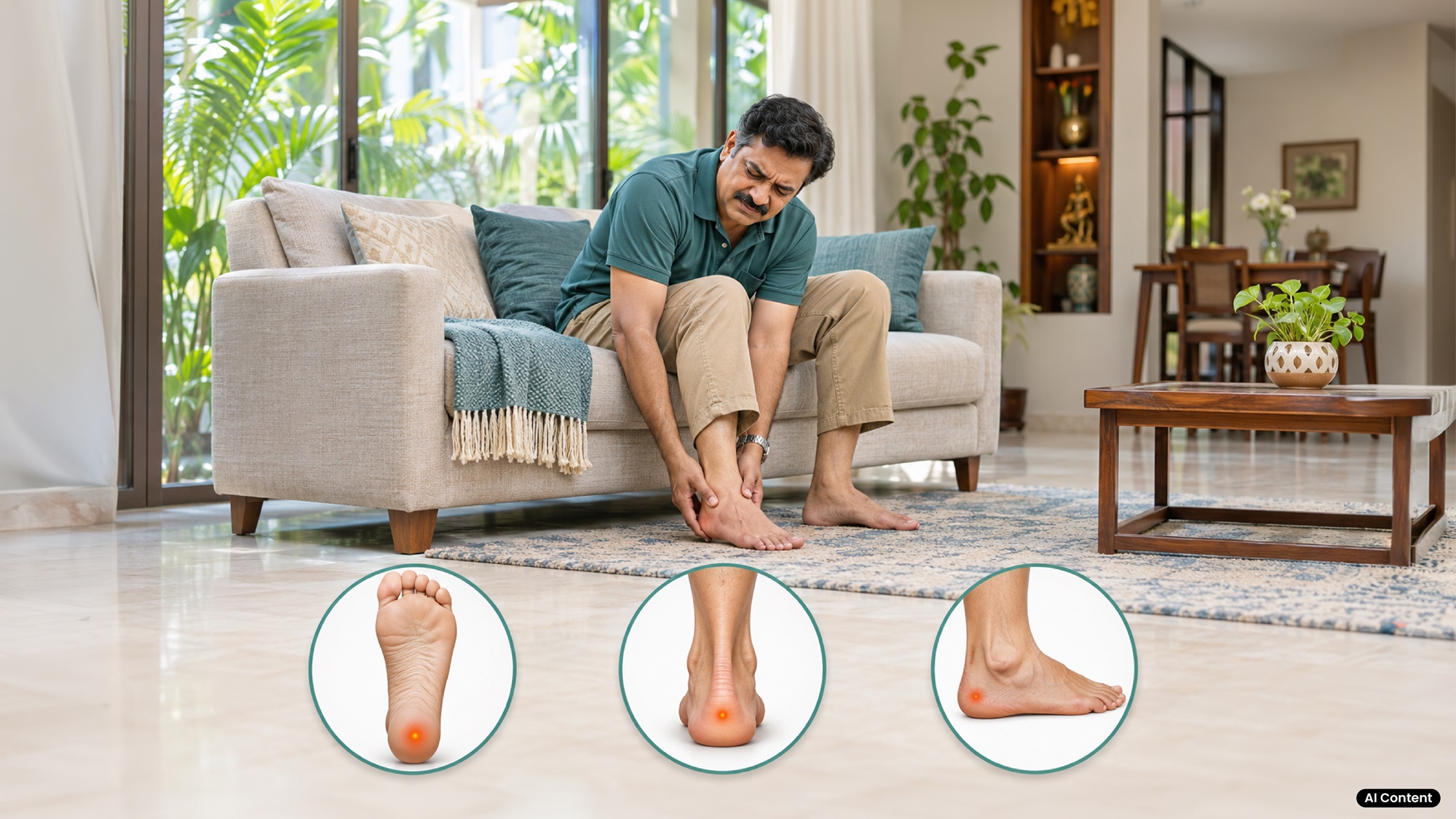
Common Causes of Heel Pain – Plantar Fasciitis, Achilles Tendinopathy, Heel Spurs and Stress Fractures
Common Causes Based on the Location of Pain in Heel
| Location | Possible causes | Typical clue |
| Under the heel | Plantar fasciitis, heel-related overuse | Pain may be worse with first steps |
| Back of the heel | Achilles tendon problems, bursitis | Pain may increase with activity |
| Side of the heel | Injury, inflammation, nerve irritation | May occur with swelling or tenderness |
How Is Heel Pain Diagnosed?
Finding the heel pain reason starts with your medical history and a musculoskeletal examination. The specialist may check your walking pattern (gait assessment), foot movement, tenderness and where the pain is felt. Imaging tests such as X-ray imaging, ultrasound or magnetic resonance imaging (MRI) may be considered in some cases, depending on the suspected cause. Gait analysis may also be used when needed. Not every patient requires scans.
What Are the Treatment and Heel Pain Relief Options?
Heel pain treatment depends on the underlying cause and severity. Options include activity modification, appropriate footwear, stretching exercises, physiotherapy (physical therapy), therapeutic exercise and pain management where medically appropriate. Orthotics (supportive shoe inserts) may be suggested in some cases. Persistent cases may need additional treatment based on the diagnosis. Surgery is generally considered only for selected conditions when appropriate non-surgical treatment has not helped. Suitability, risks and recovery vary from person to person, and rehabilitation is often part of the plan.
Home Measures That May Help Mild Heel Pain
For mild pain, these may help:
- Rest and reducing activities that aggravate the pain
- Supportive footwear
- Gentle calf and foot stretching
- Gradual return to activity
Consult an orthopaedic doctor if pain lasts more than a few weeks or keeps returning.

Home Measures for Mild Heel Pain – Rest, Supportive Footwear and Foot Stretching Exercises
When Should You See a Doctor for Heel Pain?
Consult an orthopaedic doctor if persistent pain continues despite simple measures or keeps returning. Warning signs include significant swelling, walking difficulty, sudden severe heel pain, numbness, or pain after a sports injury or other musculoskeletal injury such as a tendon injury or stress injury. Early orthopaedic assessment can help identify the underlying problem and may prevent prolonged discomfort. If symptoms interfere with walking, work, exercise or daily activities, consult an orthopaedic specialist to discuss suitable heel pain treatment.
FAQ
Q: What is the most common cause of heel pain?
Plantar fasciitis is a common cause of pain under the heel. It happens when the plantar fascia, a strong band of tissue supporting the foot, becomes irritated. Pain may be more noticeable with the first few steps after waking or after sitting for a long time. Other conditions can also cause similar symptoms.
Q: How can I get heel pain relief at home?
For mild heel pain, reducing activities that worsen the pain, wearing comfortable supportive footwear and doing appropriate stretching may help. Avoid suddenly increasing running or other high-impact activities. If the pain continues, becomes severe or affects normal walking, consult an orthopaedic specialist to identify the underlying cause.
Q: When should I see a doctor for heel pain?
You should consider medical evaluation if heel pain lasts for several days, keeps returning or interferes with walking and daily activities. Prompt assessment is particularly important after an injury, or if you have severe pain, significant swelling, numbness or difficulty putting weight on the affected foot.
Q: What treatment is available for heel pain in Hyderabad?
Heel pain treatment in Hyderabad depends on the cause and may include activity modification, supportive footwear, stretching, physiotherapy, medicines when appropriate and other treatments based on the diagnosis. A specialist may recommend imaging or additional treatment if needed. The right approach depends on your symptoms and examination findings.
Q: Can heel pain go away without treatment?
Some mild cases of heel pain may improve with rest, activity modification, suitable footwear and appropriate exercises. However, persistent or recurring pain should not be ignored because different conditions can produce similar symptoms. If heel pain continues or affects your normal activities, a medical assessment can help identify the cause.
CONCLUSION
Heel pain can have several causes, and identifying the underlying reason is important for choosing the right treatment. Persistent, severe or activity-limiting pain is worth getting assessed instead of managed with prolonged self-treatment. If heel pain is affecting your walking, work or daily activities, see an orthopaedic doctor to discuss your symptoms and appropriate treatment options.
AI Disclosure: This post may include content, visuals, or media created or enhanced with the assistance of AI tools and reviewed by Our team before publishing. Read More: AI Disclosure.