What is cervical spondylosis?
Cervical spondylosis is age-related wear and tear affecting the bones, discs and joints in the neck. It can cause neck pain, stiffness and, in some people, symptoms in the shoulders, arms or hands. These changes develop gradually, and some people have them without noticing any symptoms. Ageing, prolonged poor posture, previous neck injury and repetitive strain can all contribute. Treatment depends on the symptoms and whether nerves or the spinal cord are affected. Guided by Dr. Siddharth Reddy’s orthopaedic approach, this article explains the cervical spondylosis definition, symptoms, causes, diagnosis, treatment options and whether it can be permanently cured.
What Are the Symptoms of Cervical Spondylosis?
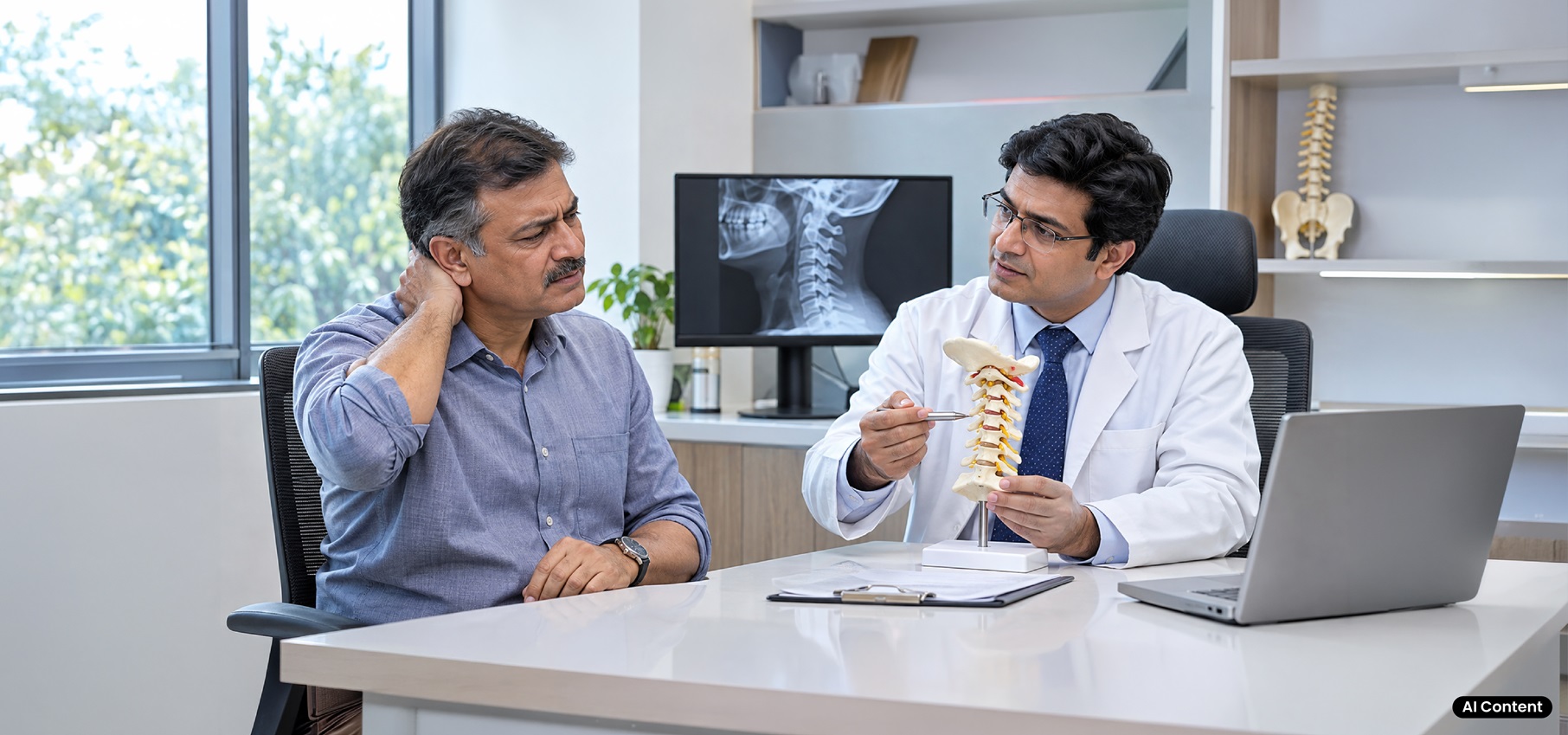
Common cervical spondylosis symptoms include neck pain, neck stiffness and reduced neck movement. If a cervical nerve root is irritated, nerve compression may cause arm pain, tingling, numbness or muscle weakness reaching the shoulder, arm or hand. Pressure on the spinal cord can cause neurological symptoms. Symptoms vary depending on the structures affected.

Cervical Spondylosis Symptoms – Neck Pain, Stiffness and Reduced Neck Movement
Common Symptoms vs Nerve-Related Symptoms
| Symptoms | What they may indicate |
| Neck pain and stiffness | Degenerative changes in the cervical spine |
| Shoulder or arm pain | Possible nerve irritation |
| Tingling or numbness | Possible nerve involvement |
| Hand or arm weakness | Requires medical assessment |
What Causes Cervical Spondylosis and Who Is at Risk?
Age-related changes are a major factor. Intervertebral disc degeneration and wear in the spinal joints of the cervical vertebrae gradually alter the neck’s structure. Neck injury, repetitive strain and poor posture may also contribute. Long periods of screen use can strain the neck’s muscles, but they are not automatically the direct cause of spinal degeneration. Having a risk factor does not mean you will develop symptoms.
Common Risk Factors
- Increasing age
- Previous neck injury
- Repetitive physical strain or musculoskeletal strain
- Prolonged poor posture
How Is Cervical Spondylosis Diagnosed and Treated?
Diagnosis usually begins with your symptoms, medical history and a physical examination. An X-ray or MRI scan (magnetic resonance imaging) may be considered if nerve or spinal cord involvement is suspected, though not everyone needs advanced cervical spine imaging.
Non-Surgical Treatment Options
Most people are managed without surgery. Options include prescribed medicines, physiotherapy, therapeutic exercises and activity modification.
When Is Surgery Considered?
Procedures or surgery, such as spinal decompression, may be considered for selected patients with significant nerve or spinal cord compression or persistent symptoms.
Can Cervical Spondylosis Be Cured Permanently?
If you are wondering how to cure cervical spondylosis permanently, there is no simple cure, because age-related structural changes generally cannot be reversed. However, symptom control is often achievable. Long-term management may include a rehabilitation programme, posture correction, ergonomic positioning, neck exercises for cervical mobility and muscle strengthening, activity modification and follow-up when required. This also helps with recurrence prevention.
When Should You See an Orthopaedic Specialist in Hyderabad?
Seek an orthopaedic consultation if neck pain persists, worsens or spreads into the arm. Urgent neurological symptoms, such as significant weakness, difficulty walking or coordination problems, need prompt assessment. At an outpatient consultation, Dr. Siddharth Reddy can carry out a neurological examination and cervical spine evaluation and suggest suitable cervical spondylosis treatment, without assuming that every patient needs advanced imaging.
FAQ
Q: What is cervical spondylosis and what causes it?
Cervical spondylosis is a condition involving age-related changes in the bones, discs and joints of the neck. These changes can develop gradually as the cervical spine undergoes wear and tear. Previous neck injuries, repetitive strain and certain physical factors may also contribute. Some people have these changes without experiencing symptoms.
Q: What are the main cervical spondylosis symptoms?
Common cervical spondylosis symptoms include neck pain, stiffness and reduced neck movement. If a nerve becomes irritated or compressed, pain may spread to the shoulder, arm or hand, sometimes with tingling, numbness or weakness. Symptoms vary between people, so persistent or worsening symptoms should be assessed by a healthcare professional.
Q: How is cervical spondylosis treated in Hyderabad?
Cervical spondylosis treatment in Hyderabad depends on the symptoms and examination findings. It may include prescribed medicines, physiotherapy, therapeutic exercises and activity modification. Some patients may need further investigation or specialist treatment if nerves or the spinal cord are affected. A specialist can recommend an appropriate plan after assessing the individual.
Q: Can cervical spondylosis be cured permanently?
There is no simple permanent cure that reverses age-related structural changes in the cervical spine. However, symptoms can often be managed effectively with appropriate treatment, exercise, rehabilitation and lifestyle adjustments. The treatment approach depends on the severity of symptoms and whether nerves or the spinal cord are involved.
Q: When should I see a doctor for cervical spondylosis?
See a doctor if neck pain or stiffness persists, keeps returning or starts affecting your daily activities. Medical assessment is especially important if you develop arm weakness, significant numbness, difficulty walking or coordination problems. These symptoms may indicate nerve or spinal cord involvement and should be evaluated promptly.
CONCLUSION
Cervical spondylosis ranges from mild neck stiffness to nerve-related symptoms. The structural changes cannot simply be reversed, but diagnosis, treatment and rehabilitation can help manage symptoms and maintain function. If persistent neck pain, stiffness or arm symptoms are affecting your daily life, consult an orthopaedic doctor for an individual assessment and treatment plan.