
How to Relieve Neck Pain: Causes and Effective Treatments

How to relieve neck pain? Mild neck pain often improves with gentle movement, posture correction, heat or cold therapy and appropriate rest. However, persistent, severe or recurring pain may need medical evaluation to identify the underlying cause.
Neck pain can develop from muscle strain, prolonged screen use, poor posture, sudden movements, injuries or conditions affecting the cervical spine. The right treatment depends on the cause and severity of the symptoms.
This guide explains how to relieve neck pain, what may be causing it, which treatments can help, how to prevent recurring discomfort and when a patient should consult a doctor.
Real data point
According to the World Health Organization, Global Burden of Disease 2019 data estimated that 222 million people worldwide had neck pain, contributing approximately 22 million years lived with disability (YLDs).
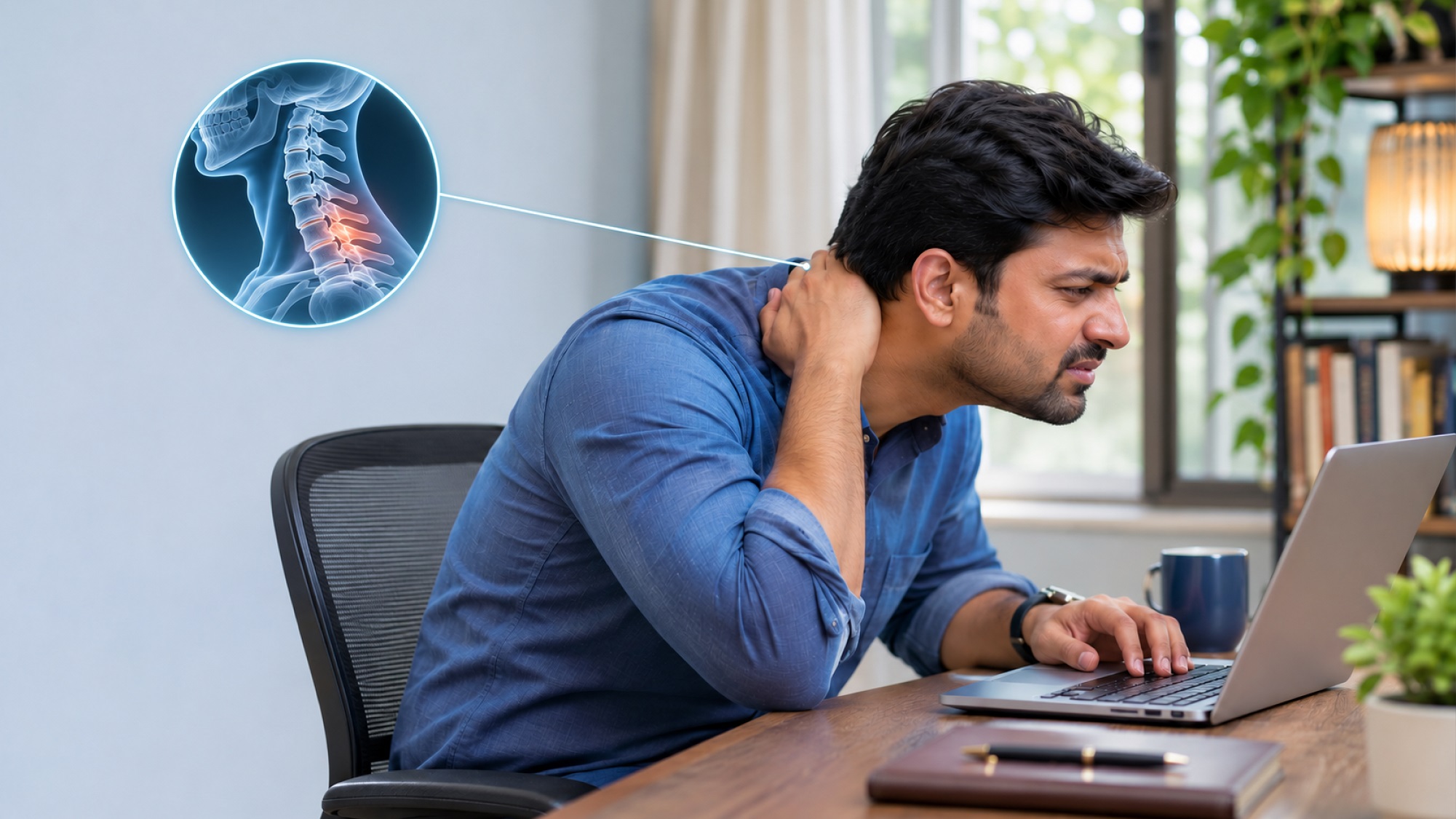
Person holding the back of their neck in discomfort.
What Causes Neck Pain?
Neck pain often stems from everyday habits rather than serious illness. Poor posture, prolonged hours hunched over a computer or mobile phone, and awkward sleeping positions place ongoing strain on neck muscles and the cervical spine, leading to stiffness and discomfort. Sudden movements, whiplash from road accidents and sports-related trauma can also injure muscles, ligaments or spinal discs.
In some cases, neck pain signals nerve irritation or an underlying issue affecting the joints or discs of the cervical spine rather than simple muscular strain. While home remedies ease most everyday stiff necks, persistent or worsening symptoms warrant proper clinical assessment to rule out deeper causes and guide appropriate treatment.
How to Relieve Neck Pain at Home?
For ordinary, uncomplicated neck pain, simple self-care usually brings relief within a few days. Gentle stretching and light neck movements help prevent stiffness by keeping the cervical muscles mobile, rather than letting them tighten further. Heat or cold therapy, applied correctly, can ease muscle tension and reduce discomfort, while posture correction during work or rest limits ongoing strain.
Contrary to common belief, prolonged bed rest or keeping the neck completely still isn't ideal for ordinary muscle-related pain; it can cause muscles to stiffen further and slow recovery. Instead, staying gently active, along with short breaks from screens and supportive sleeping positions, aids muscle relaxation. If home measures don't help within a few days, consulting a physiotherapist is advisable, as guided by bodies like the Indian Association of Physiotherapists.
Heat or Cold for Neck Pain?
- Cold therapy may help reduce swelling and numb discomfort after certain recent injuries or acute strain.
- Heat may ease muscle stiffness or tension for some people, especially with chronic or recurring pain.
- Always use a cloth barrier between the skin and the heat or cold source, and avoid prolonged direct application to prevent skin damage.
Which Treatments Can Help Relieve Neck Pain?
Treatment for neck pain depends largely on the underlying cause and severity of symptoms. For most muscle-related discomfort, physiotherapy, therapeutic exercises and posture or ergonomic correction form the mainstay of the treatment of pain in neck, helping restore mobility and prevent recurrence. Medicines may offer additional relief in some cases but should only be used according to appropriate medical advice, as self-medication can mask underlying issues.
When symptoms suggest a structural, nerve or spinal problem, imaging or specialist treatment may be considered to confirm the diagnosis and guide targeted care, in line with recommendations from bodies such as the Indian Orthopaedic Association.
Physiotherapy for Neck Pain
- Mobility exercises to restore normal neck movement
- Strengthening exercises for supporting cervical muscles
- Posture correction to reduce ongoing strain
- Ergonomic advice for workstations and daily habits
When May Further Evaluation Be Needed?
- Persistent or recurrent symptoms despite home care
- Pain spreading into the arm
- Numbness or weakness in the arm or hand
- Pain following significant trauma or injury
Patient example
A patient who spent several hours daily working on a laptop developed recurring neck stiffness and discomfort. Following a clinical assessment, the management plan focused on posture correction, targeted mobility exercises, ergonomic workstation adjustments and regular movement breaks — leading to gradual, sustained improvement.
How Is the Cause of Neck Pain Diagnosed?
Diagnosing neck pain begins with a detailed medical history, where the doctor notes when symptoms started, their nature, aggravating factors and any past injuries or conditions. This is followed by a physical examination to assess neck range of motion, tenderness and posture, along with a neurological assessment to check muscle strength, reflexes and sensation in the arms and hands. It's advisable to consult an orthopaedic specialist for an accurate diagnosis rather than self-assessing symptoms.
If these findings suggest nerve involvement or a structural issue, further diagnostic imaging may be recommended. An X-ray is often the first step when bony changes or alignment problems are suspected, while an MRI is used when nerve compression, disc problems or soft-tissue involvement need closer evaluation. In select cases, a CT scan or nerve conduction study may also be considered to pinpoint the exact cause and guide appropriate treatment.
How Can You Prevent Neck Pain From Coming Back?
Preventing recurring neck pain, including how to relieve back neck pain, comes down to everyday habits rather than quick fixes. Poor workstation setup and constant phone use strain the cervical spine, so raising screen height and avoiding a hunched posture go a long way. Regular movement breaks during long sitting spells also help, keeping muscles loose and blood flowing.
Sleep matters too — a supportive pillow that keeps the neck aligned, not propped too high or low, prevents morning stiffness. And once the acute pain eases, gradual strengthening and mobility exercises, ideally under a physiotherapist's guidance (say, from the Indian Association of Physiotherapists), build lasting resilience against flare-ups.
Everyday Habits for a Healthier Neck
- Keep screens at a comfortable viewing height, roughly at eye level
- Avoid holding the phone between the shoulder and ear
- Take regular breaks from desk work to stretch and move
- Avoid staying in one position for extended periods, even while relaxing

Orthopaedic specialist examining a patient’s neck during a consultation.
When Should You See a Doctor for Neck Pain?
While most neck pain settles with home care, some symptoms call for professional assessment. If pain persists beyond a week or two, keeps worsening, or is severe from the start, it's worth consulting an orthopaedic specialist rather than waiting it out. Similarly, numbness, tingling or weakness in the arms or hands often points to nerve involvement that needs proper evaluation. Neck pain often shares its root causes with related conditions like back pain, so if you're also dealing with lower back discomfort, this guide on Back Pain Treatment may help too.
Neck pain following a significant accident or injury, a fall, road traffic accident or sports collision should also be checked promptly, even if symptoms seem mild at first, as underlying damage isn't always obvious right away.
When Is Neck Pain an Emergency?
Certain symptoms need urgent attention rather than a routine consultation. Head to the emergency department if you experience:
- Severe neck pain after major trauma
- New weakness or loss of sensation in the arms or legs
- Difficulty walking or maintaining balance
- Loss of bladder or bowel control
- Other sudden neurological symptoms
FAQ
Q: Can sleeping position cause neck pain?
Yes, awkward sleeping positions and poor pillow support disrupt cervical alignment, causing positional strain overnight. This often leads to morning neck stiffness. Choosing a pillow that maintains proper spinal positioning helps reduce pressure distribution issues and musculoskeletal tension.
Q: Can using a mobile phone cause neck pain?
Yes, prolonged phone use encourages forward head posture, increasing cervical loading significantly. This postural strain from poor screen ergonomics builds musculoskeletal stress over time, contributing to neck muscle tension, stiffness and discomfort with continued use.
Q: What exercises are good for neck pain?
Gentle neck movements, cervical stretching and mobility exercises help restore range of motion. Neck strengthening exercises support postural training and motor control. A physiotherapist can guide appropriate therapeutic exercise for safe, effective neck rehabilitation.
Q: Which doctor should I consult for neck pain in Hyderabad?
An orthopaedic specialist provides clinical evaluation and spinal assessment for persistent neck pain. For musculoskeletal medicine concerns involving cervical rehabilitation, seeking specialist referral ensures proper diagnostic assessment and appropriate spine care.
Q: Can stress cause neck pain and stiffness?
Yes, psychological stress triggers a stress response that increases cervical muscle activity and neuromuscular tension. This heightens pain perception and muscle tightness. Relaxation techniques and stress management help ease tension-related discomfort.
Conclusion
Neck pain may result from everyday habits such as prolonged screen use and poor posture, but injuries, nerve problems and cervical spine conditions can also cause symptoms. Simple measures may help mild discomfort, while persistent or severe pain needs professional assessment.
Book a consultation with our orthopaedic or spine specialist to identify the exact cause of your neck pain and receive a treatment plan suited to your symptoms and condition.