Broken Bones and Fractures: First Aid Steps Everyone Should Know
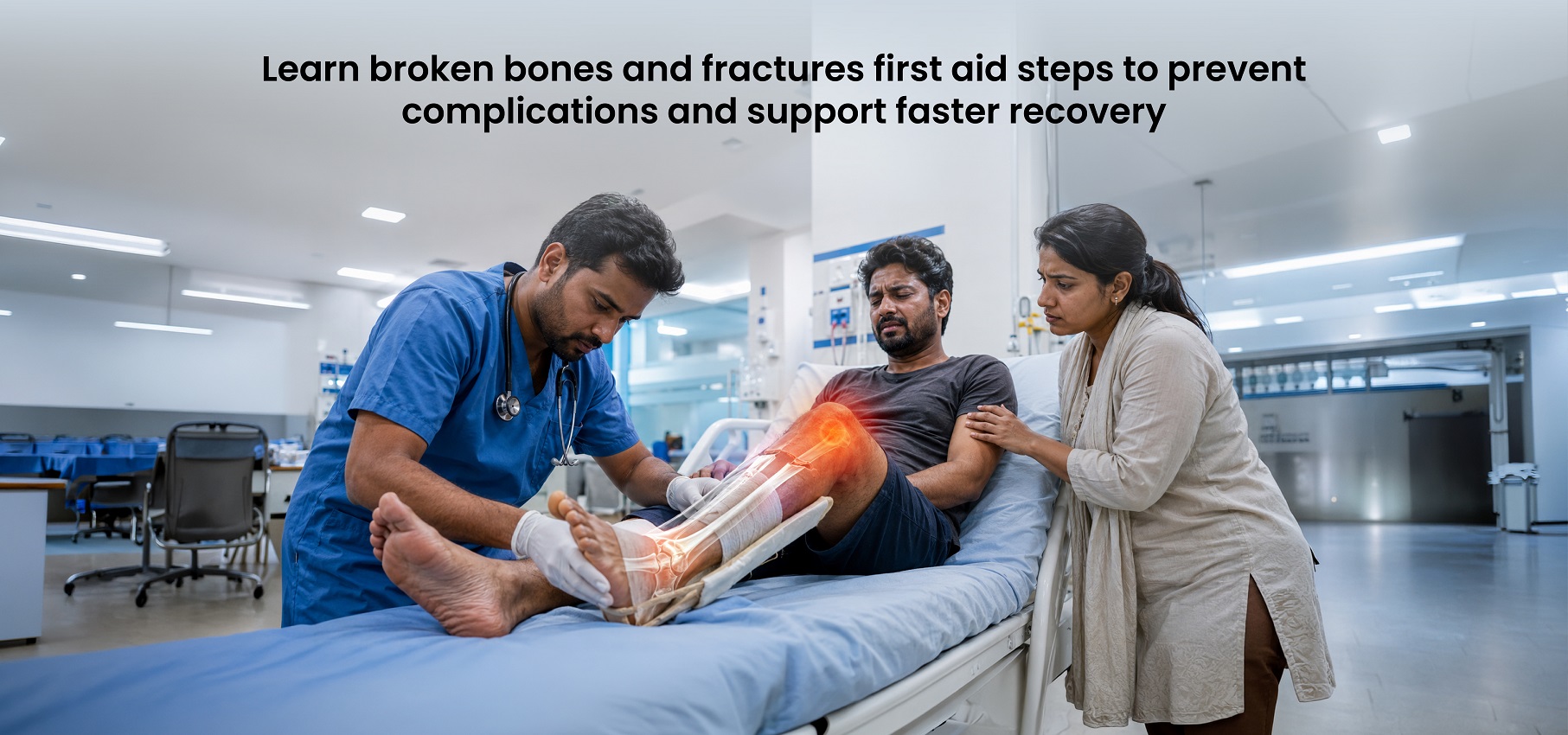
First aid for fractures involves immobilising the injured area, controlling bleeding, and seeking immediate medical help. Acting quickly can prevent further damage and reduce pain before professional treatment is available.
Common Fractures can happen anytime during falls, accidents, or sports injuries and knowing the correct first aid steps can make a big difference in recovery. Many people ignore early signs or handle fractures incorrectly, which can worsen the injury.
In this guide, you’ll learn how to identify a fracture, perform basic first aid for broken bones, understand emergency treatment steps, and know when to visit a hospital in India.
What is the first aid for a fracture and why is it important?
Knowing what is the first aid for a fracture can prevent long-term damage. Immobilise the injured area, control bleeding, and avoid unnecessary movement before hospital treatment. Improper handling risks worsening the break or causing nerve damage. In India, road accidents and falls are leading causes. The Indian Red Cross Society, Ministry of Health and Family Welfare, and WHO India all stress that correct emergency response and trauma care basics save lives.
Types of Fractures
- Closed fracture — bone breaks internally; skin intact
- Open fracture — bone pierces skin; high infection risk; needs urgent care
- Stress fracture — hairline crack from repetitive pressure
- Greenstick fracture — partial break common in children
Identifying the fracture type helps prioritise the right broken bone care and fracture support immediately.
Real Data:
According to data from the Ministry of Road Transport and Highways (MoRTH), road accidents contribute to over 30% of fracture cases in India making timely emergency response and correct first aid for broken bones more critical than ever.
Case Example:
A 38-year-old patient involved in a road accident received correct first aid immediately after the injured limb was immobilised before hospital arrival. Prompt action prevented further displacement, and surgeons confirmed surgery was unnecessary. A plaster cast and physiotherapy were sufficient for full recovery.
What are the signs and symptoms of a bone fracture?
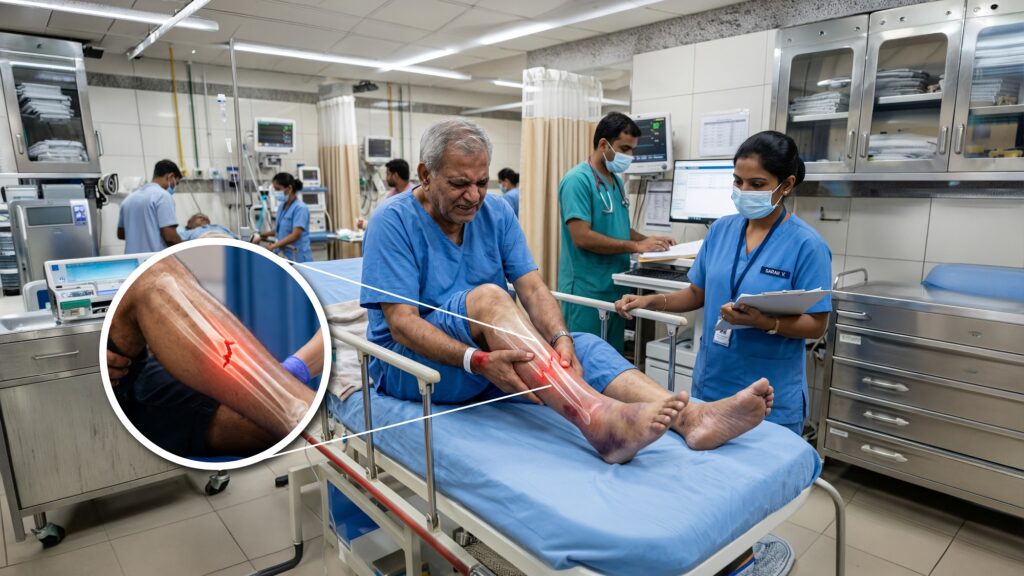
Recognising fracture symptoms early makes all the difference. Severe pain, swelling, visible deformity, bruising, inability to move or bear weight, and bleeding are key bone injury signs. A swelling injury alone doesn’t confirm a fracture distinguishing first aid for fractures and sprains matters, as sprains involve ligament stretch, not a broken bone. AIIMS Delhi, National Health Portal India, and ICMR stress prompt injury diagnosis to prevent complications.
Step-by-step first aid for fractures (Emergency Checklist)
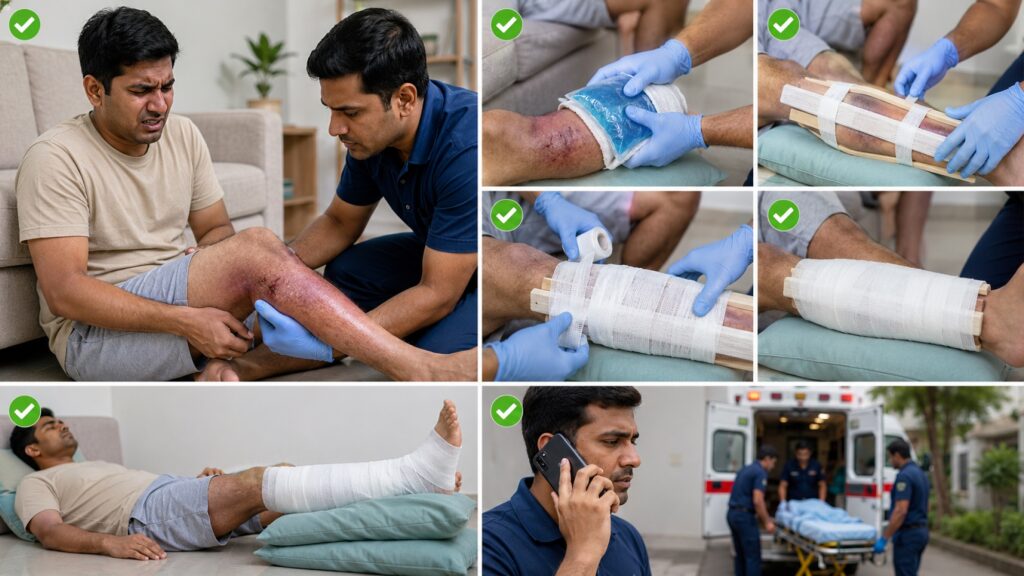
- Immobilise the injured area using a splint or support.
- Control bleeding with a clean cloth or bandage.
- Apply a cold pack to reduce swelling and pain.
- Avoid unnecessary movement to prevent further injury.
- Call emergency services or seek medical help immediately.
These fracture first aid steps are recommended by St John Ambulance India and the Indian Red Cross Society for safe trauma first aid and emergency care.
First Aid for Hand Fracture
Keep the hand supported and avoid movement until medical help arrives.
First Aid for Broken Bones at Home
Use basic support, reduce movement, and seek immediate medical attention.
First aid for fractures vs sprains
Knowing the difference between a ligament injury vs bone injury can prevent serious complications. First aid for fractures and sprains differs significantly — yet both cause pain, swelling, and limited movement, making injury comparison tricky. WHO India and the National Health Portal India recommend never assuming it’s “just a sprain.” The Sports Authority of India highlights this distinction especially for athletes. When in doubt, always treat it as a fracture until professionally assessed.
| Feature | Fracture | Sprain |
| Pain type | Severe, sharp, constant | Moderate, aching |
| Swelling differences | Immediate, significant | Gradual, mild to moderate |
| Deformity | Possible visible deformity | Rarely present |
| Movement | Severely limited or impossible | Painful but possible |
| Bruising | Often present | May appear later |
| Immediate care | Immobilise, seek emergency care | RICE method (Rest, Ice, Compress, Elevate) |
| When to suspect fracture | Heard a crack, cannot bear weight | Pain eases with rest |
Emergency treatment for fracture in India
Emergency treatment for fracture in India varies widely by setting. Ambulance costs range ₹500–₹3,000, while X-rays cost ₹200–₹1,000 and plaster casts ₹500–₹3,000. Government hospitals like AIIMS Delhi offer heavily subsidised orthopaedic care, while private hospitals charge significantly more. The Ayushman Bharat Scheme covers eligible patients, making fracture treatment India-wide more accessible. Timely hospital treatment remains critical delays risk permanent damage.
When should you seek immediate medical help for fractures?
Never delay first aid for broken bones when you notice these emergency symptoms:
- Visible bone or open wound at the fracture site
- Severe pain with complete inability to move the injured area
- Signs of shock — dizziness, pale skin, rapid breathing
- Rapid swelling or significant bruising appearing immediately
- Numbness or tingling around the injury — signs of nerve involvement
- Any fracture in children, elderly, or high-impact trauma victims
Dr. Siddharth Reddy stresses that delayed fracture complications such as infection, nerve damage, and improper healing are largely preventable with timely orthopaedic care.
FAQ
What is the first aid treatment for a fracture?
First aid for a fracture includes keeping the injured area still, using a splint or support to immobilise it, and applying a cold pack to reduce swelling. If there is bleeding, it should be controlled immediately. The patient should be taken to the nearest hospital as soon as possible.
How do I know if it is a fracture or a sprain?
A fracture usually causes intense pain, swelling, and sometimes visible deformity, while a sprain involves ligament injury and less severe pain. If you cannot move the affected area or bear weight, it is safer to treat it as a fracture and seek medical help.
What should not be done during fracture first aid?
Do not try to move or straighten the injured limb forcefully. Avoid massaging the area or applying heat. These actions can worsen the injury. Always keep the area stable and wait for professional medical treatment.
What is the cost of fracture treatment in India?
Initial treatment like X-Ray may cost ₹300–₹1,500, while plaster or casting can cost ₹1,000–₹5,000. Surgery, if required, may cost between ₹50,000 and ₹3 lakh depending on the severity and hospital type.
Where can I get emergency fracture treatment in cities like Mumbai or Pune?
Emergency fracture treatment is available at government hospitals, private hospitals, and trauma centres in cities like Mumbai and Pune. It is important to choose a hospital with orthopaedic specialists for proper diagnosis and treatment.
CONCLUSION
Knowing the correct first aid for fractures can prevent complications and speed up recovery. Quick action and proper care make a significant difference in outcomes.
If you or someone around you suffers an injury, seek immediate medical help and consult an orthopaedic specialist for proper diagnosis and treatment.