Common Reasons for Leg Swelling You Should Know

Leg swelling (oedema) usually happens when fluid builds up in the tissues of your legs, often because of prolonged standing, pregnancy or a minor injury. It can also signal heart, kidney, liver or vein problems that need medical attention.
By the end of this blog, you will understand the most common reasons behind leg swelling, how to tell when it is harmless and when it needs urgent care, and simple steps you can take at home before seeing a doctor.
Real data point/stat
A report by the National Academy of Medical Sciences states that the incidence of deep vein thrombosis (DVT) in India’s general population is approximately 1.79 per 1,000. This highlights the importance of recognising symptoms and seeking timely medical assessment.
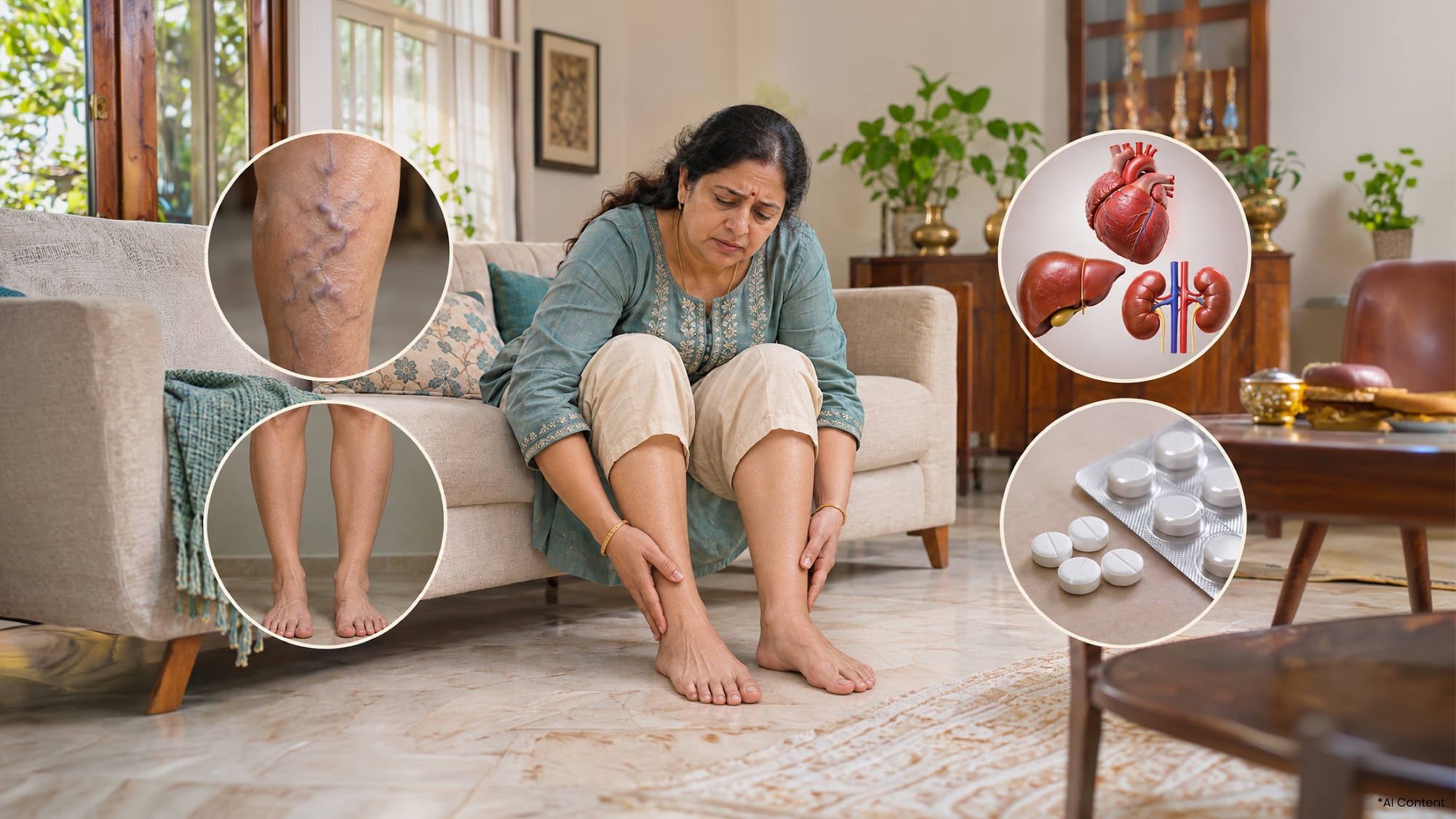
Leg Swelling (Oedema) – Causes, Fluid Retention, DVT and Warning Signs
Why Are My Legs Swelling? Common Medical Reasons
If you keep asking why your legs are swelling, a medical cause may be behind it:
- Varicose veins: weakened vein valves let blood pool in the legs, causing heaviness and swelling.
- Lymphoedema: poor lymphatic drainage traps fluid, usually in one limb.
- Heart, kidney and liver disease: when these organs struggle, the body retains fluid, often in both legs.
- Medicines: some blood pressure tablets and steroids can cause fluid retention.
These conditions need a doctor's diagnosis, not self-treatment.
Deep Vein Thrombosis (DVT): A Warning Sign You Shouldn't Ignore
DVT is a blood clot in a deep leg vein, typically causing sudden swelling in one leg with pain, warmth or redness. A clot can travel to the lungs, so sudden breathlessness or chest pain needs emergency care.
Reasons Behind Leg Swelling — Lifestyle & Everyday Triggers
Everyday habits are among the commonest reasons behind leg swelling:
- Long hours of sitting or standing: desk jobs and factory work let fluid pool in the lower legs.
- Too much salt: pickles, papad and processed snacks are high in sodium.
- Excess weight and inactivity: both weaken circulation in the legs.
- Hot, humid weather: heat widens blood vessels, so more fluid leaks into tissues, especially in summer.
If swelling follows a fall or joint problem, consult the best orthopaedic surgeon for a proper assessment.
Common Leg Swelling Causes
| Cause | Leg affected | Common symptoms | Urgency |
| Pregnancy | Both | Mild puffy feet and ankles | Low (urgent if sudden or with headache) |
| DVT | Usually one | Pain, warmth, redness | Urgent |
| Heart failure | Both | Breathlessness, tiredness | Urgent |
| Varicose veins | One or both | Heavy, aching legs | Moderate |
| Injury | Usually one | Pain, bruising | Moderate |
| Medication side effect | Both | Swelling after a new medicine | Moderate (ask your doctor) |
If your symptoms match an urgent row, see a doctor straight away or check the FAQs below.
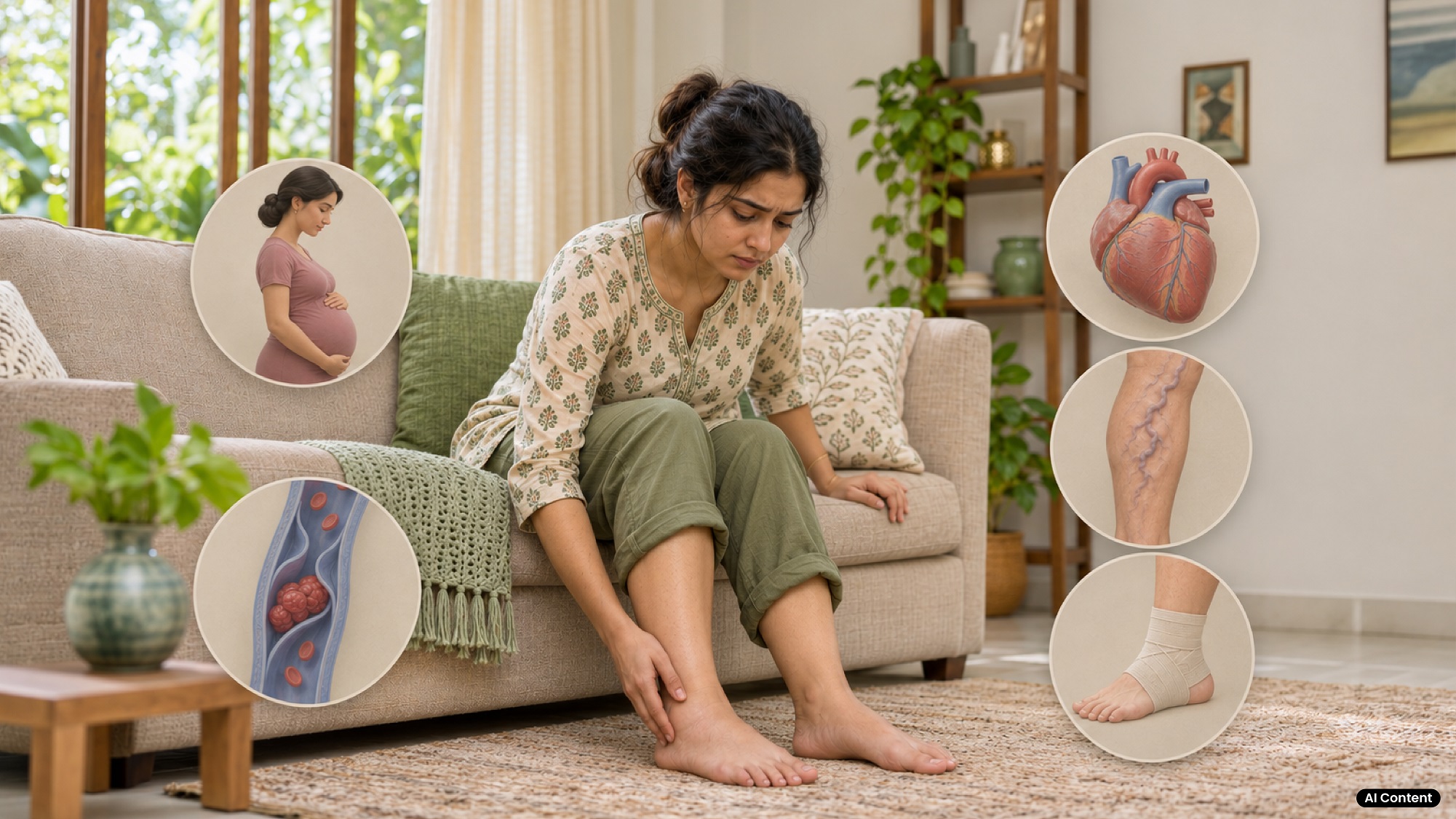
Common Lifestyle Causes of Leg Swelling – Prolonged Sitting, Excess Salt, Inactivity and Hot Weather
Leg Inflammation vs. Leg Swelling — Are They the Same?
Not quite. Swelling is fluid build-up and is not always painful. Leg inflammation is the body's response to injury or infection, bringing redness, warmth and tenderness. Causes include cellulitis, arthritis and insect bites. Spreading redness or fever may mean an infection needing antibiotics, so see a doctor promptly. A local clinic suits mild symptoms; go to an emergency department for severe pain, high fever or breathlessness.
Case Example:
A 45-year-old patient noticed swelling in one leg and sought medical attention promptly. Following clinical assessment and Doppler ultrasound, DVT was diagnosed, allowing the medical team to initiate appropriate treatment without unnecessary delay.
Conclusion
Leg swelling can range from a harmless result of a long day on your feet to a sign of an underlying condition that needs attention. Knowing the difference, and acting early, makes all the difference to your recovery and peace of mind.
CTA: If your leg swelling does not go away with rest, or you are worried about the cause, book an orthopaedic consultation with our specialists today for a proper diagnosis and personalised care plan.
FAQ
Q: Can leg swelling be a sign of a serious health condition?
A: Yes, sometimes. It is often harmless, but it can point to heart, kidney or liver problems, or a blood clot (DVT). See a doctor promptly if swelling is sudden, affects one leg, or comes with pain or breathlessness.
Q: What is the reason for leg swelling in only one leg?
A: One-sided swelling is more concerning than swelling in both legs. It often points to a blood clot (DVT), injury, infection or a vein problem, so get it checked rather than waiting it out.
Q: How can I reduce leg swelling at home?
A: Raise your legs above heart level when resting, avoid sitting or standing for long stretches, cut down on salty foods, stay hydrated and wear comfortable footwear. These suit mild swelling; persistent or worsening swelling needs medical evaluation.
Q: Is leg swelling common during pregnancy?
A: Yes, mild swelling of the feet and ankles is common, especially in later months. Sudden or severe swelling, particularly with headache or blurred vision, can signal a complication and needs urgent medical attention.
Q: When should I see a doctor for leg swelling?
A: See a doctor if swelling is sudden, affects one leg, is painful, or comes with redness, warmth, shortness of breath or chest pain. Also seek advice if it does not improve after a few days of rest and home care.