What Is a Shoulder Joint Dislocation? What to Do Immediately?
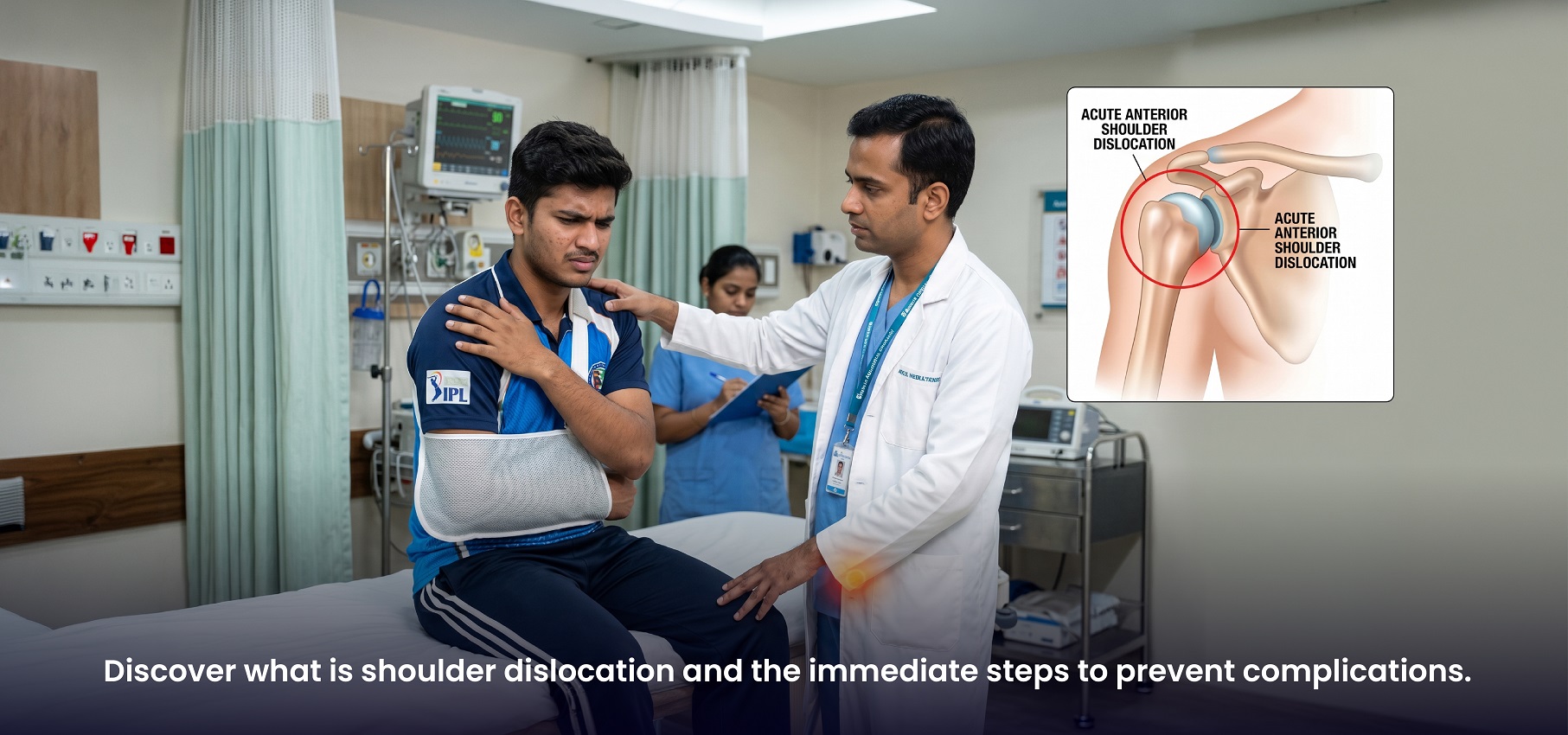
A dislocated shoulder is an injury in which the upper arm bone pops out of the cup-shaped socket that’s part of the shoulder blade. The shoulder is the body’s most flexible joint, which makes it more likely to dislocate. Since the shoulder works through a ball and socket joint mechanism, a strong impact can lead to a ball and socket joint injury shoulder and traumatic shoulder displacement. This may cause joint capsule disruption, ligament support damage, and joint alignment loss, resulting in a painful shoulder instability condition and structural shoulder instability.

Common Causes of Shoulder Dislocation
Shoulder dislocations typically occur when a traumatic joint force pushes the joint beyond its natural limits. A shoulder injury from a fall, like dropping onto a stiff, straightened arm, is one of the most everyday scenarios doctors see. Sports-related shoulder dislocations happen regularly in contact games, while high-impact shoulder injuries from collisions cause impact-related joint displacement. Even a sudden arm movement injury or rotational arm stress from an awkward twist can create ligament overstretch, resulting in structural joint overload and trauma-causing shoulder displacement.
Possible Shoulder Dislocation Complications
Shoulder dislocation can sometimes lead to complications if the injury is severe or not treated properly. One possible issue is nerve damage after shoulder dislocation, caused by nerve compression risk around the joint. Some patients may also develop repeated shoulder instability, known as recurrent joint instability, where the shoulder easily slips out again. Shoulder ligament injury complications can occur due to ligament structural damage, leading to joint weakness after injury. Over time, people may experience chronic shoulder pain after dislocation, chronic joint weakness, and even long-term mobility limitation affecting daily arm movement.
Dislocated Shoulder Healing Time and Recovery Process
The Dislocated Shoulder Healing Time and Recovery Process varies depending on the severity of the injury and the treatment method, but generally takes anywhere from six weeks to three months. For example, nerve damage after shoulder dislocation may develop due to nerve compression risk around the shoulder. Many people also face repeated shoulder instability, known as recurrent joint instability, where the joint slips out again during daily activities. Shoulder ligament injury complications can occur because of ligament structural damage, leading to joint weakness after injury. As months pass, this may result in chronic shoulder pain after dislocation, chronic joint weakness, and possible long-term mobility limitation.
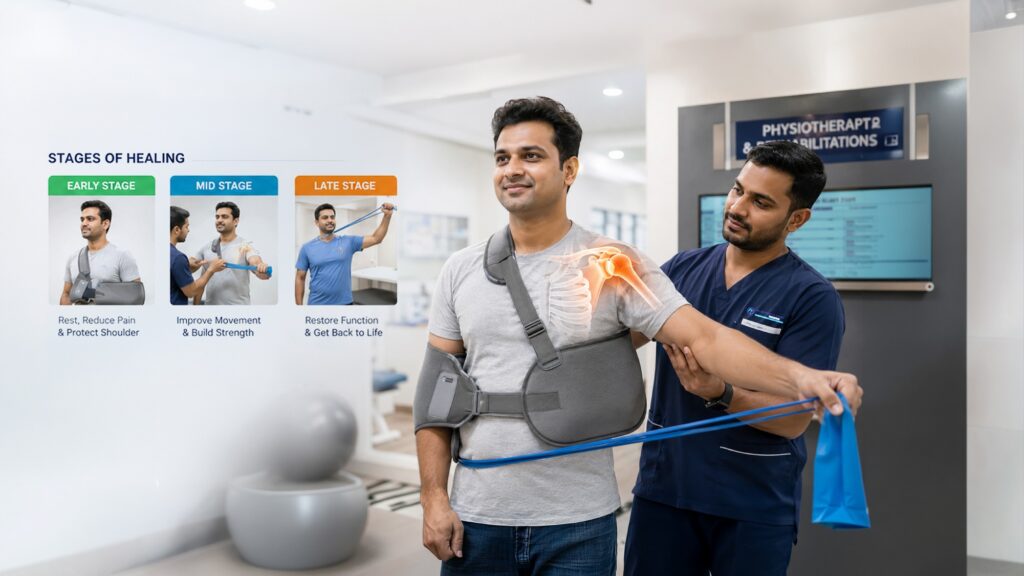
Recovery times can vary based on factors such as age, severity of the dislocation, and adherence to rehabilitation exercises. Overall, a combination of proper medical care, physical therapy, and gradual return to activity can help individuals regain full function and prevent long-term complications from a dislocated shoulder.
FAQ
Can a Dislocated Shoulder Be Fixed Immediately?
Yes, doctors treat Shoulder Dislocation quickly using Closed Reduction, a method of shoulder joint repositioning. This shoulder dislocation emergency treatment relieves pain and restores normal Shoulder Joint alignment.
What to Do Immediately After Shoulder Dislocation?
After a shoulder dislocation, give First Aid by immobilizing the dislocated shoulder, applying an ice pack for shoulder injury, and seeking emergency treatment for shoulder dislocation to protect the Rotator Cuff.
Can a dislocation cause arthritis?
Yes, Shoulder Dislocation can increase the risk of Shoulder Arthritis or Post-Traumatic Arthritis. Cartilage damage and joint injury may lead to arthritis over time.
What Are the Long Term Effects of a Dislocated Shoulder?
Long-term effects of Shoulder Dislocation include Chronic Shoulder Instability, repeated shoulder dislocation, weakness in the Glenohumeral Joint, and ongoing shoulder mobility problems affecting daily arm movement.