Frozen Shoulder: Symptoms, Causes & Treatment

Imagine waking up every morning unable to lift your arm. That’s the reality for millions living with Frozen Shoulder. Frozen Shoulder is a painful orthopedic condition characterized by progressive shoulder stiffness, shoulder joint pain, and limited shoulder movement that significantly impacts daily activities. Medically known as adhesive capsulitis, this condition occurs when the tissue surrounding the shoulder joint becomes inflamed and tightens, severely restricting normal motion. Patients often experience chronic shoulder pain that worsens gradually over weeks and months. Shoulder inflammation plays a central role in its progression, making early diagnosis critical for effective recovery. With the right orthopedic treatment plan, patients can regain full shoulder mobility and return to a pain-free, active lifestyle.
What Is Frozen Shoulder?
What seems like slight stiffness can slowly turn into a serious movement restriction that’s frozen shoulder. Frozen shoulder, clinically known as adhesive capsulitis, is a stiff shoulder condition where the shoulder capsule the connective tissue surrounding the glenohumeral joint becomes severely inflamed and thickened. This adhesive capsulitis definition explains why painful shoulder movement becomes increasingly unavoidable as the capsule tightens. In simple frozen shoulder meaning, the joint loses its natural flexibility due to inflammation and scar tissue buildup within the connective tissue, progressively limiting range of motion and causing persistent discomfort without proper orthopedic intervention.
Frozen Shoulder Symptoms: What Are the Symptoms of Frozen Shoulder?
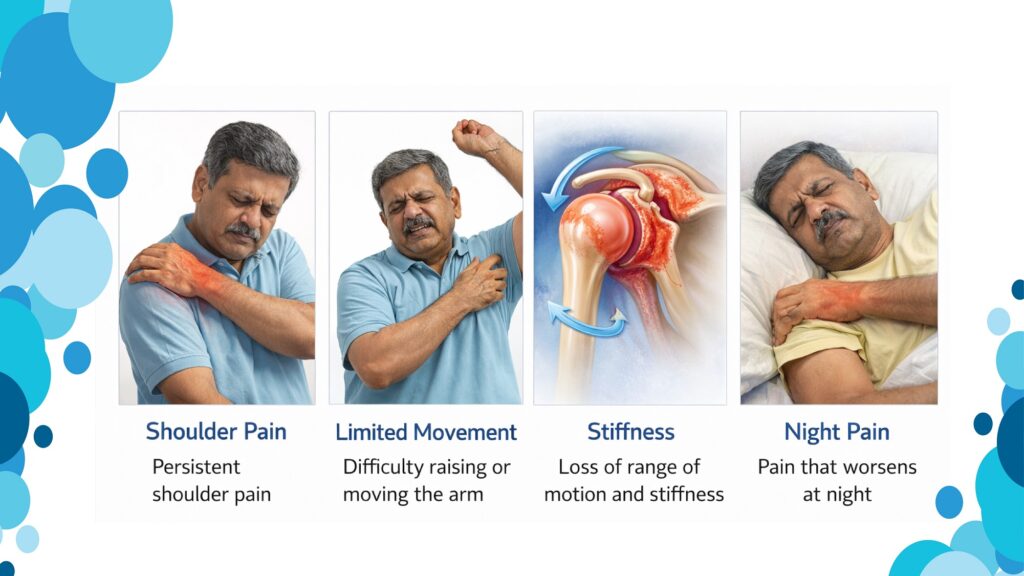
Frozen shoulder develops gradually, and its symptoms slowly make everyday arm movements difficult.
- Persistent ache: The shoulder may feel dull and heavy most of the day, a type of Chronic Pain that doesn’t fully go away even with rest.
- Shoulder pain at night: Many people notice stronger discomfort while sleeping, especially when lying on the affected side.
- Joint stiffness: Gradual tightening of the capsule leads to clear Joint Stiffness, making the shoulder feel “locked.”
- Difficulty lifting arm: Simple tasks like combing hair or reaching a shelf become hard due to weak movement control.
- Restricted range of motion: The arm refuses to move freely, reducing the normal Range of Motion in all directions.
- Pain during small movements: Even turning the arm slightly can trigger discomfort from the body’s Inflammatory Response.
Frozen Shoulder Causes: Common Reasons for Frozen Shoulder
Frozen shoulder (adhesive capsulitis) causes pain and stiffness in the shoulder. It starts gradually, worsens for a while, and then slowly improves over 1–3 years. Frozen shoulder causes mainly involve thickening and tightening of the capsule surrounding the shoulder joint, which restricts movement. The most common reason for frozen shoulder is long immobility after an arm fracture, sling use, or recovery from shoulder surgery, leading to post-surgery shoulder stiffness. A prior rotator cuff injury may also trigger inflammation and healing tightness. People with diabetes mellitus have a higher risk (diabetes and frozen shoulder link). In many cases, untreated shoulder injury complications gradually reduce flexibility and normal motion.
Stages of Frozen Shoulder and How It Progresses
Frozen shoulder doesn’t happen overnight it unfolds in three distinct stages of adhesive capsulitis:
- Freezing Stage (Inflammatory Stage): The shoulder begins to ache intensely, and pain gradually worsens. Stiffness starts setting in, significantly limiting daily movement.
- Frozen Stage (Fibrotic Stage): Pain slightly reduces but stiffness reaches its peak. The progression of frozen shoulders makes even simple movements extremely difficult.
- Thawing Stage (Recovery Phase): Mobility slowly returns as the shoulder loosens. With proper orthopedic care, full movement can be restored over time.
Frozen Shoulder Treatment Options: Non-Surgical and Surgical
The good news? Frozen shoulder is treatable and most patients recover beautifully with the right approach. Frozen shoulder treatment is tailored to the stage and severity of the condition, ranging from conservative to advanced interventions:
Non-Surgical Treatment:
- Physical Therapy: The cornerstone of treatment for adhesive capsulitis, targeted exercises restore flexibility, improve strength, and provide lasting pain relief for shoulder stiffness.
- Anti-inflammatory Medication: Oral Anti-inflammatory Medication helps manage swelling and reduce discomfort during the early inflammatory stage.
- Corticosteroid Injection: Steroid injections directly into the shoulder joint deliver powerful pain relief for shoulder stiffness, reducing inflammation and improving mobility significantly.
- Heat & Manual Therapy: Complementary techniques that relax the shoulder capsule and support physical therapy progress.
Surgical Treatment:
- Arthroscopy (Arthroscopic Surgery): When non-surgical options fall short, minimally invasive Arthroscopy releases the tightened capsule, restoring full shoulder movement with minimal downtime.
- Manipulation Under Anesthesia (MUA): The shoulder is gently moved while the patient is sedated, breaking up scar tissue to improve range of motion effectively.
With the right frozen shoulder treatment plan, returning to a pain-free, active life is absolutely possible.

Best Exercises and Physiotherapy for Frozen Shoulder Treatment
Movement is medicine especially for frozen shoulder recovery. A structured Rehabilitation Program through Physical Therapy is one of the most effective ways to restore mobility. Key rehabilitation exercises include:
- Pendulum Exercise: Gently loosens the shoulder joint and reduces stiffness.
- Stretching Exercises for Frozen Shoulder: Shoulder Stretching Techniques improve flexibility and ease painful movement.
- Shoulder Mobility Exercises: Gradually rebuild range of motion.
- Physiotherapy for Shoulder Pain: Professionally guided sessions accelerate healing and prevent recurrence.
How Long Does Frozen Shoulder Recovery Take?
Patience is the most underrated part of frozen shoulder recovery but the results are worth it. Frozen shoulder recovery time varies depending on the stage and treatment approach. On average, the Recovery Timeline spans anywhere from 6 months to 3 years. A structured Physiotherapy Plan significantly accelerates shoulder mobility improvement and shortens the long-term recovery process. Early diagnosis, consistent rehabilitation, and expert orthopedic guidance are key factors that determine healing duration and ensure lasting, pain-free movement.
When to See a Doctor for Frozen Shoulder Symptoms
Don’t wait until your shoulder stops moving completely. Early action changes everything. Consult an Orthopedic Doctor if you experience severe shoulder pain, persistent stiffness, or difficulty performing daily activities like dressing or reaching overhead. Delayed orthopedic consultation often leads to prolonged recovery. A shoulder specialist will conduct a thorough examination supported by Diagnostic Imaging such as an MRI Scan to confirm diagnosis and rule out other conditions. The sooner you seek care, the faster your recovery journey begins.
Tips to Prevent Frozen Shoulder and Improve Shoulder Mobility
Prevention is always better than cure keep your Shoulder Muscles active and resilient with these simple strategies:
- Shoulder Strengthening Exercises: Regularly strengthening surrounding muscles through Exercise Therapy reduces injury risk significantly.
- Regular Stretching Routine: Daily stretching maintains flexibility and prevents capsule tightening.
- Posture Correction: Poor posture strains the shoulder joint and mindful alignment makes a big difference.
- Mobility Exercises: Consistent mobility exercises maintain healthy joint range of motion.
- Early Treatment of Shoulder Injury: Addressing injuries promptly is the cornerstone of Preventive Orthopedics, preventing complications like frozen shoulders.
FAQ:
What is the best treatment for frozen shoulders?
Frozen shoulder treatment involves adhesive capsulitis therapy, physiotherapy, stretching, and orthopaedic specialist guidance, improving shoulder stiffness treatment and providing effective shoulder pain relief for the shoulder joint.
What is the reason for frozen shoulders?
Causes of frozen shoulder include shoulder stiffness causes such as diabetes, thyroid disorders, injury, or post‑surgery stiffness, leading to adhesive capsulitis reasons affecting the shoulder capsule and joint mobility.
What are the 4 stages of frozen shoulder?
Frozen shoulder stages progress through adhesive capsulitis phases: initial inflammation, increasing stiffness, peak fibrosis, and gradual recovery, showing shoulder stiffness progression within the shoulder joint over time.
What is the best exercise for a frozen shoulder?
Frozen shoulder exercises include shoulder mobility exercises and stretching for shoulder stiffness, guided by a physiotherapist, targeting rotator cuff muscles to restore shoulder joint flexibility and reduce pain.
What foods are bad for frozen shoulders?
Inflammatory foods worsen frozen shoulders, so a diet for frozen shoulders should avoid foods raising blood sugar, impacting diabetes, and harming joint health, reducing inflammation and stiffness in the shoulder.