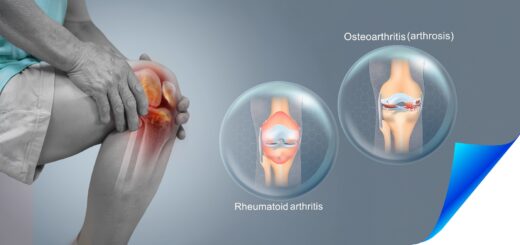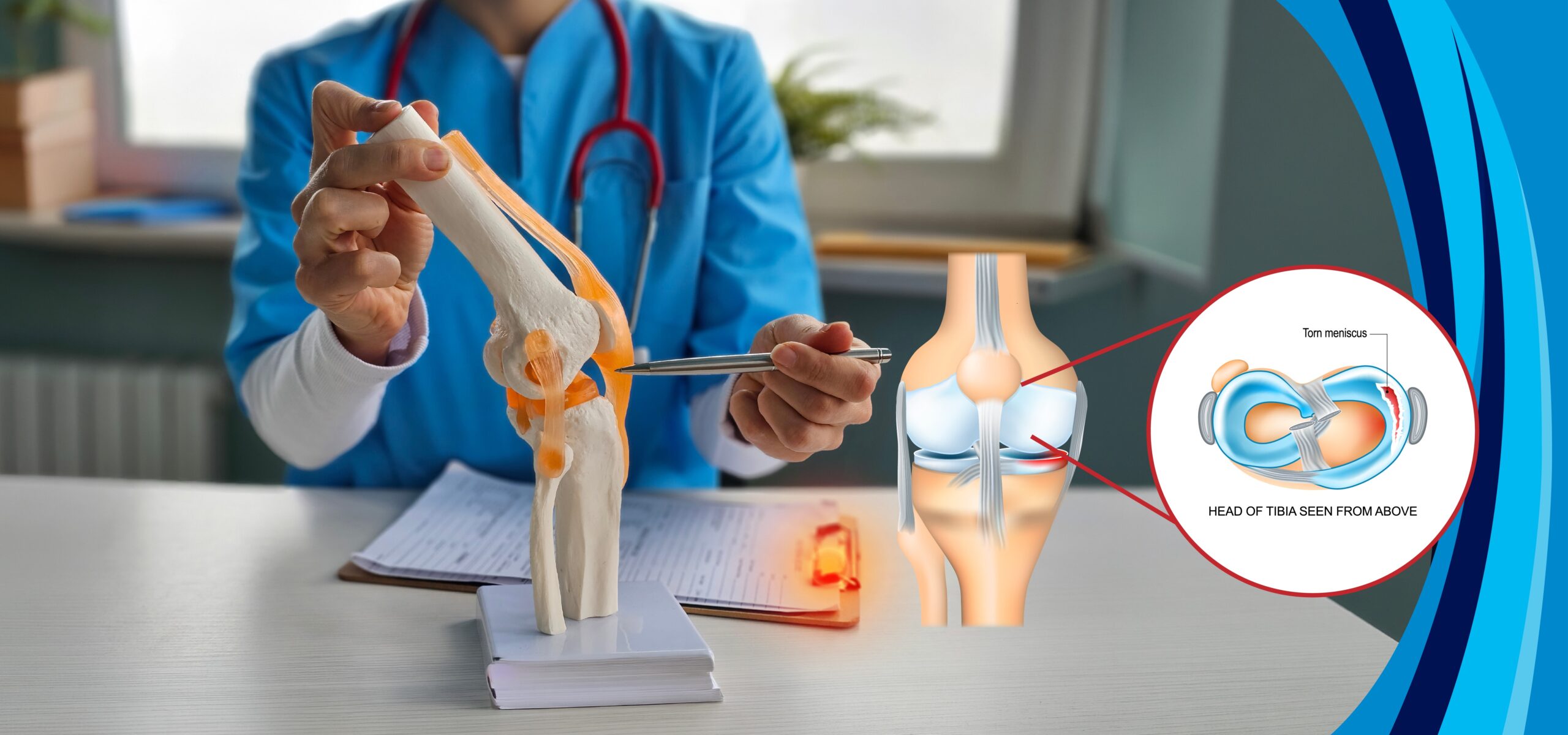
What Is Patellofemoral Pain Syndrome (PFPS)?
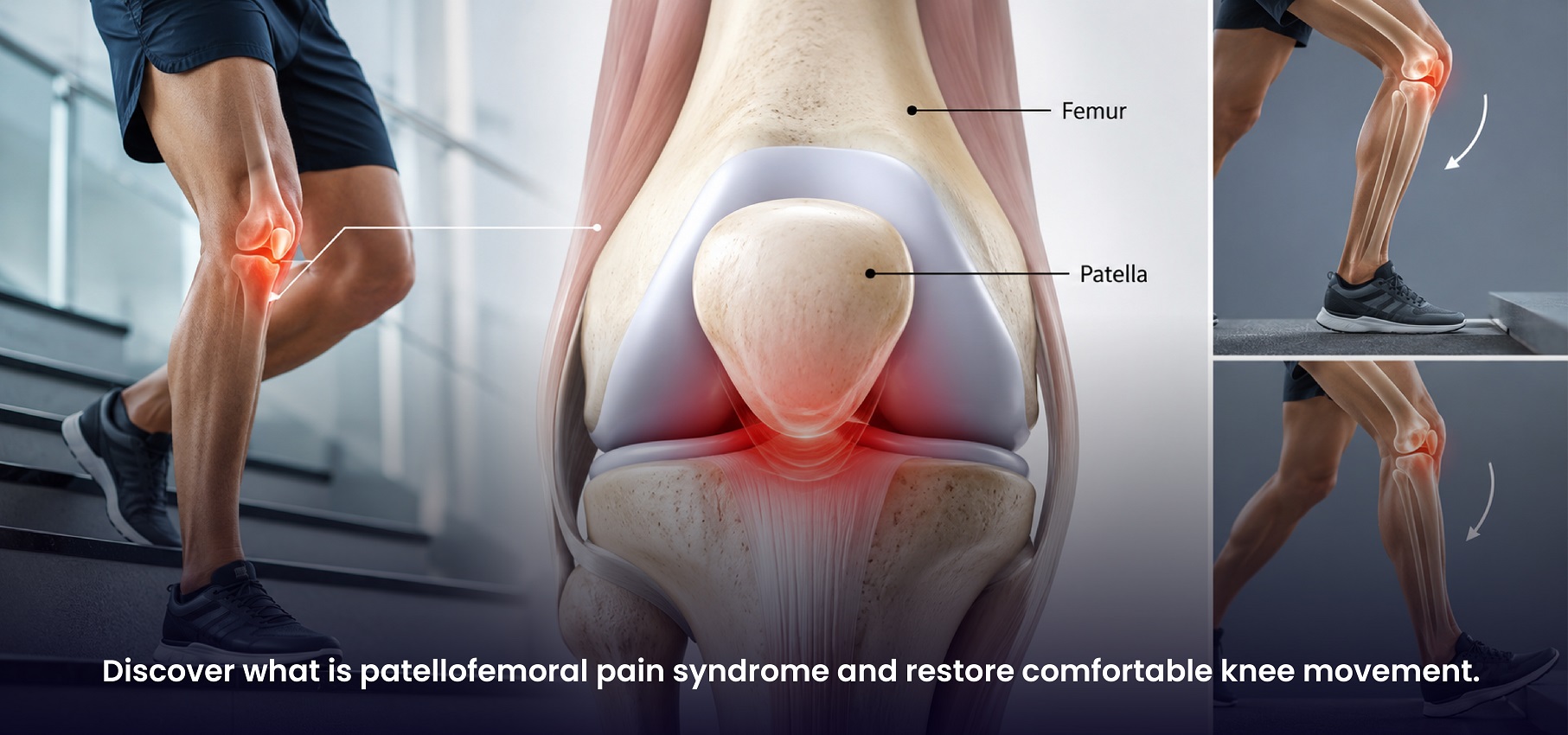
Patellofemoral Pain Syndrome (PFPS) refers to pain felt at the front of the knee around the kneecap. This patellofemoral joint pain explanation is often linked to problems with how the kneecap moves during knee motion. When the kneecap does not move properly in the joint, it can affect normal patellofemoral joint mechanics. This may lead to uneven cartilage stress distribution and a biomechanical knee imbalance, which can cause ongoing kneecap pain syndrome and contribute to a patella movement disorder.
Common Symptoms of Patellofemoral Pain Syndrome and Pain in Front of the Knee
People with patellofemoral pain syndrome often notice a dull, aching pain front knee, especially during everyday movements. Common pain around kneecap symptoms include knee discomfort climbing stairs, squatting, or even knee pain sitting for a long time with bent knees. These symptoms usually happen because of patellar compression stress and anterior joint pressure buildup inside the joint. Many patients also feel knee stiffness after activity or movement-induced knee discomfort. Over time, repeated stress can trigger a repetitive strain response, leading to functional mobility limitation during walking, running, or exercise.
Patellofemoral Pain Syndrome Causes and Risk Factors
Patellofemoral Pain Syndrome (PFPS), often referred to as “runner’s knee,” is a common condition characterized by pain around or behind the kneecap, arising from irritation of the cartilage under the patella. Common causes of PFPS knee pain include overuse knee injury causes, muscle imbalance knee pain, and improper knee alignment causes that affect normal movement. These issues may lead to biomechanical alignment imbalance and muscular support weakness around the knee. Over time, repetitive stress knee injury and repetitive joint stress mechanism can create movement pattern dysfunction, increasing structural joint strain and pain around the kneecap.
Patellofemoral Pain Syndrome Treatment Options and Exercises
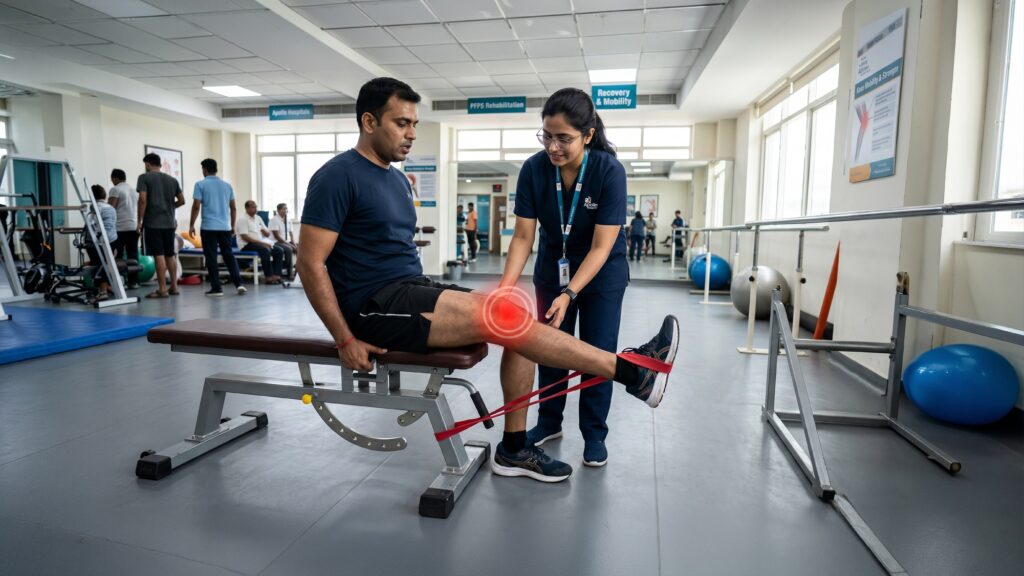
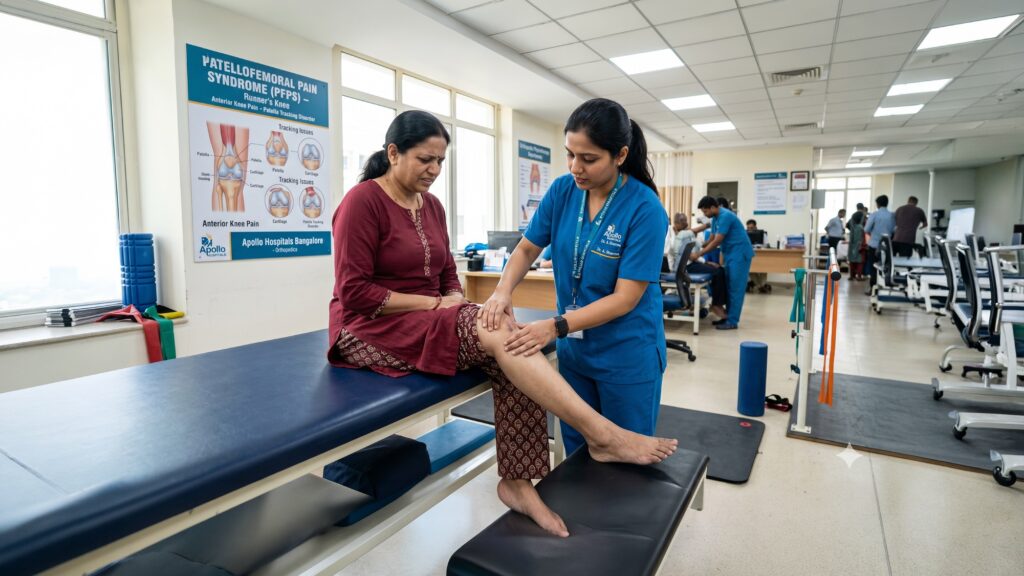
Managing PFPS often involves pfps treatment options that focus on reducing pain and improving knee function. An orthopedic doctor usually suggests non-surgical treatment for front knee pain, including exercises for patellofemoral pain syndrome and knee strengthening exercises pfps. A therapeutic strengthening program and joint stabilization training help support the kneecap. With proper rehabilitation for knee pain, a mobility restoration protocol and functional rehabilitation strategy are used as part of a conservative knee care approach.
Patellofemoral Pain Syndrome Recovery Time and Prevention Tips
PFPS recovery time varies; most people heal within a few weeks, though tissue recovery progression depends on severity. Managing joint load and following a movement correction strategy speeds up the healing time for front knee pain significantly. To prevent patellofemoral pain syndrome, focus on knee injury prevention tips like strengthening and stretching regularly. Proper injury risk reduction approaches and consistent long-term knee pain management keep you moving while supporting long-term joint health maintenance.
FAQ
Can you fix patellofemoral syndrome?
Yes, patellofemoral pain syndrome or PFPS can improve with patellofemoral pain syndrome treatment, including PFPS recovery exercises, patellofemoral rehabilitation, and proper knee cap pain treatment for long-term anterior knee pain therapy.
What is patellofemoral pain syndrome pain in the front of the knee?
Patellofemoral pain syndrome (PFPS) is an anterior knee pain syndrome causing pain around the kneecap. It often occurs due to patella tracking disorder, leading to kneecap joint pain during walking or climbing stairs.
How long does patellofemoral syndrome take to go away?
PFPS recovery time varies, but patellofemoral syndrome healing time usually ranges from weeks to months. With proper knee rehabilitation duration and physiotherapy, anterior knee pain recovery improves during the patellofemoral rehab timeline.
What to avoid with patellofemoral syndrome?
People with PFPS or patellofemoral pain syndrome should avoid activities to avoid PFPS such as high-impact knee exercises, running on hard surfaces, and other knee pain trigger activities, causing joint strain.