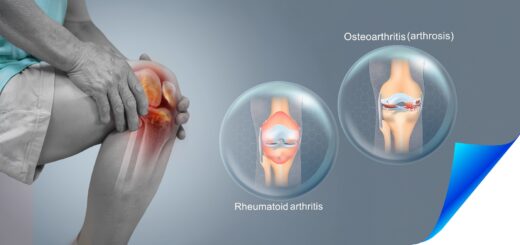
What Is a Meniscus Tear: Causes & Symptoms
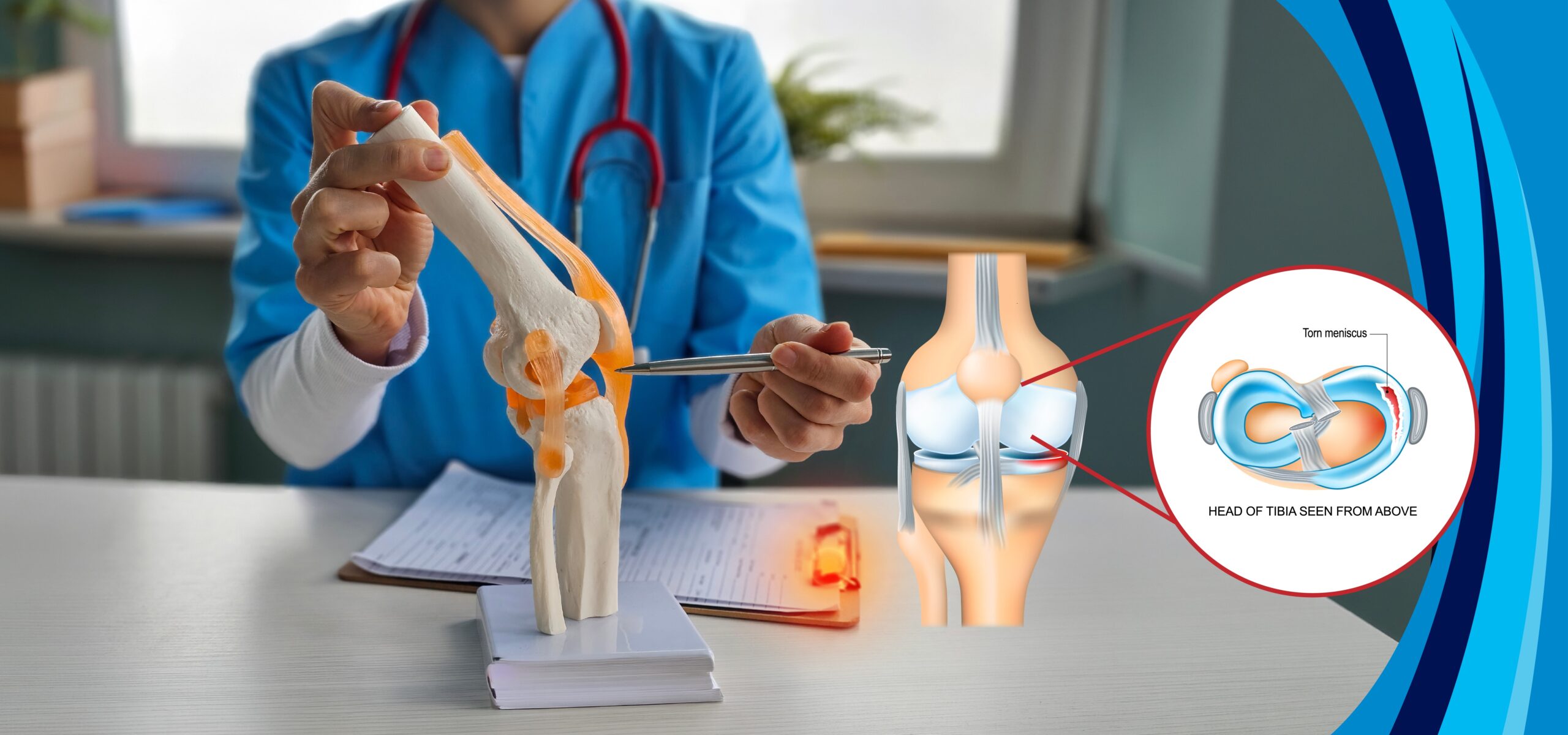
When the knee locks, swells, and refuses to cooperate, a meniscus tear is often the reason behind it all. This orthopedic injury occurs when the cartilage cushioning inside the knee joint sustains sudden force or gradual wear, disrupting the stability the meniscus provides with every movement.
From sports knee injuries on the field to age-related cartilage damage in the knee, a torn meniscus affects people across all activity levels. Knee joint pain alongside knee locking and swelling signals that something inside needs urgent clinical attention. Sports medicine specialists identify knee cartilage injury through structured assessment, ensuring accurate diagnosis before the condition progresses further.
What Is a Meniscus Tear in the Knee?
The knee joint structure contains two C-shaped cartilage discs sitting between the femur and tibia: the medial meniscus on the inner side and the lateral meniscus on the outer side. These structures absorb shock, distribute load, and stabilise every movement the knee performs.
A knee cartilage tear occurs when either disc sustains damage through twisting, impact, or degeneration. A medial meniscus tear is more frequently diagnosed than a lateral meniscus tear, though both disrupt knee function considerably. Torn cartilage in the knee left unaddressed alters joint mechanics, accelerating long-term deterioration and increasing discomfort during routine daily activity.
Meniscus Tear Symptoms You Should Not Ignore
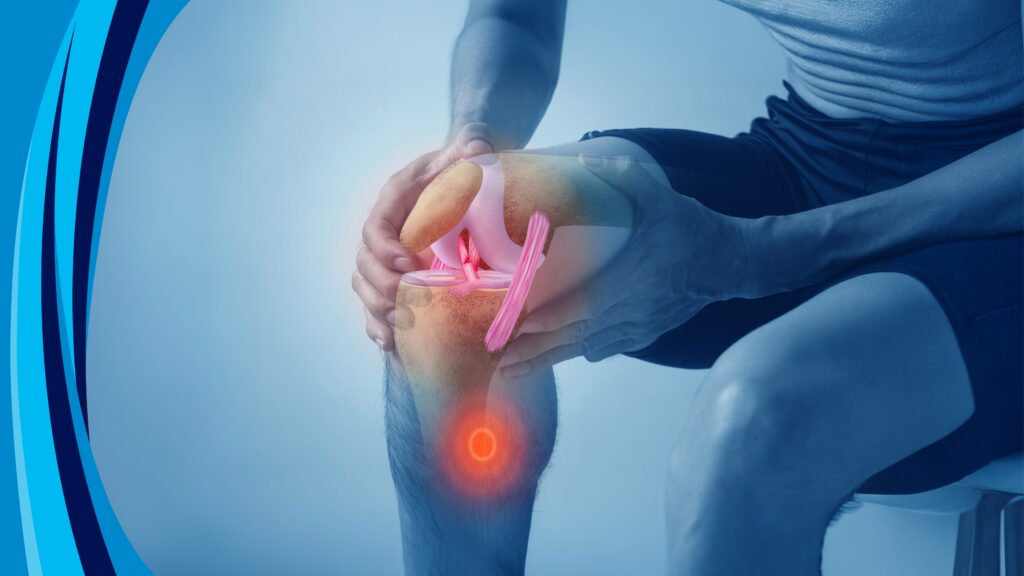
Most people know something is wrong the moment a meniscus tear happens. A popping sensation in the knee at the point of injury is often the first signal, followed swiftly by knee swelling as joint inflammation takes hold in response to tissue damage.
Knee pain while bending, stiffness in the knee joint, and difficulty straightening the knee gradually reduce range of motion, making everyday tasks like walking or climbing stairs increasingly difficult. Knee locking where the joint physically refuses to extend indicates torn cartilage has shifted out of position.
These orthopedic symptoms require prompt clinical evaluation rather than self-managed rest alone.
Common Causes of Meniscus Tear
The meniscus tears when the knee twists, rotates, or bends in a direction the joint was not built to handle. In younger people and athletes, a sudden twisting injury or sports-related knee injury during impact, sharp direction changes, or awkward landings typically causes acute knee trauma. These incidents frequently coincide with anterior cruciate ligament damage, as both structures absorb similar forces simultaneously.
In middle-aged to older individuals, aging and cartilage degeneration through degenerative joint disease or osteoarthritis weakens the meniscus over time, meaning even routine movements can trigger a tear without any significant external force or ACL injury involved.
Meniscus Tear Treatment Options
Not every meniscus tear ends in surgery; the right path depends on tear severity, location, and the patient’s age and activity level. Initial management follows the RICE method: rest, ice, compression, and elevation, supported by NSAIDs to reduce inflammation and pain.
Physical therapy for the knee builds strength around the joint, restoring stability through structured knee rehabilitation exercises that protect surrounding tissue. Where symptoms persist despite conservative care, arthroscopic surgery offers a minimally invasive route either trimming damaged tissue or repairing the tear through orthopedic surgery.
Meniscus tear treatment without surgery now increasingly includes platelet-rich plasma therapy, with research confirming improved recovery outcomes alongside traditional physical therapy approaches.
When to See a Doctor for a Meniscus Tear
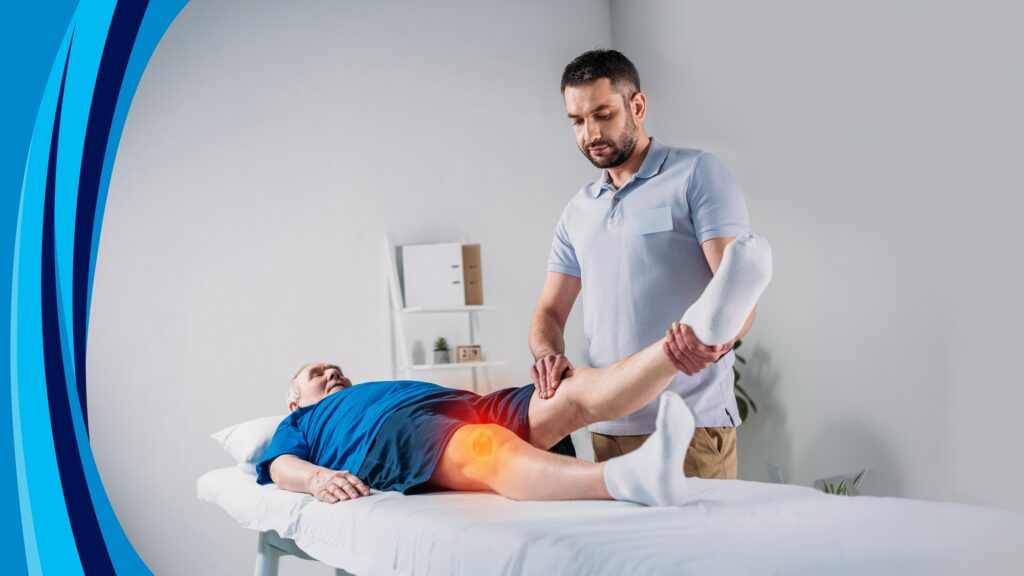
Severe knee pain, persistent knee swelling, or knee instability that does not settle within 48 hours warrants an orthopedic consultation without delay. Inability to bear weight on the affected leg signals that self-managed care is no longer sufficient.
A knee specialist or sports injury clinic will arrange an MRI scan to assess tear severity and guide treatment decisions. Early intervention with an orthopedic doctor consistently produces better recovery outcomes than prolonged self-management.
Diagnosis and Tests for Meniscus Tear Symptoms
Diagnosing a meniscus tear begins with a physical knee examination, where an orthopedic specialist performs the McMurray test or Thessaly test to reproduce symptoms and assess joint mechanics. These clinical assessments guide the need for further imaging for knee injury.
An MRI for meniscus tear remains the most reliable diagnostic imaging tool, revealing tear location, size, and type with precision. A knee X-ray rules out associated bone damage. Together, magnetic resonance imaging and clinical testing establish a complete diagnostic picture before treatment begins.
Prevention Tips to Avoid Meniscus Tear
Knee injury prevention begins long before any sport or physical activity starts. Consistent knee strengthening exercises targeting the quadriceps muscles and hamstring muscles build the joint support that reduces tear risk considerably. Always warming up before sports prepares cartilage and surrounding tissue for load.
Proper sports technique minimises awkward movements that stress the meniscus under pressure. Weight management reduces daily joint loading, whilst preventive orthopedics and structured sports training address biomechanical imbalances before they develop into something more serious.
FAQ
How serious is a meniscus tear?
Meniscus tear severity depends on the extent of knee cartilage injury. Torn meniscus symptoms include pain, swelling, and knee locking, requiring evaluation by an orthopaedic surgeon for proper treatment.
What is the best treatment for a meniscus tear?
Meniscus tear treatment may involve knee arthroscopy, non‑surgical knee treatment, or meniscus repair. Diagnosis through MRI scan helps guide physical therapy and surgical options, depending on the severity of the meniscus injury.
What is the new treatment for meniscus tear?
Advanced meniscus treatment includes regenerative therapy knee options like PRP therapy and stem cell therapy, combined with arthroscopy and sports medicine approaches to promote healing and restore knee function effectively.
Is meniscus repair a major surgery?
Meniscus surgery procedure is usually performed as arthroscopic knee surgery, considered a minimally invasive knee surgery. Meniscus repair is guided by an orthopaedic surgeon, offering faster recovery compared to open surgery.
Can I repair a torn meniscus without surgery?
Non‑surgical meniscus treatment includes meniscus healing naturally through rest, knee physiotherapy, and strengthening exercises. Many mild meniscus injuries improve with physical therapy, reducing pain and restoring knee joint mobility.
What knee support is needed for a meniscus tear?
A knee brace for meniscus tear provides stability. Knee support for cartilage injury often includes a hinged knee brace, offering orthopaedic support to protect the meniscus and aid recovery.